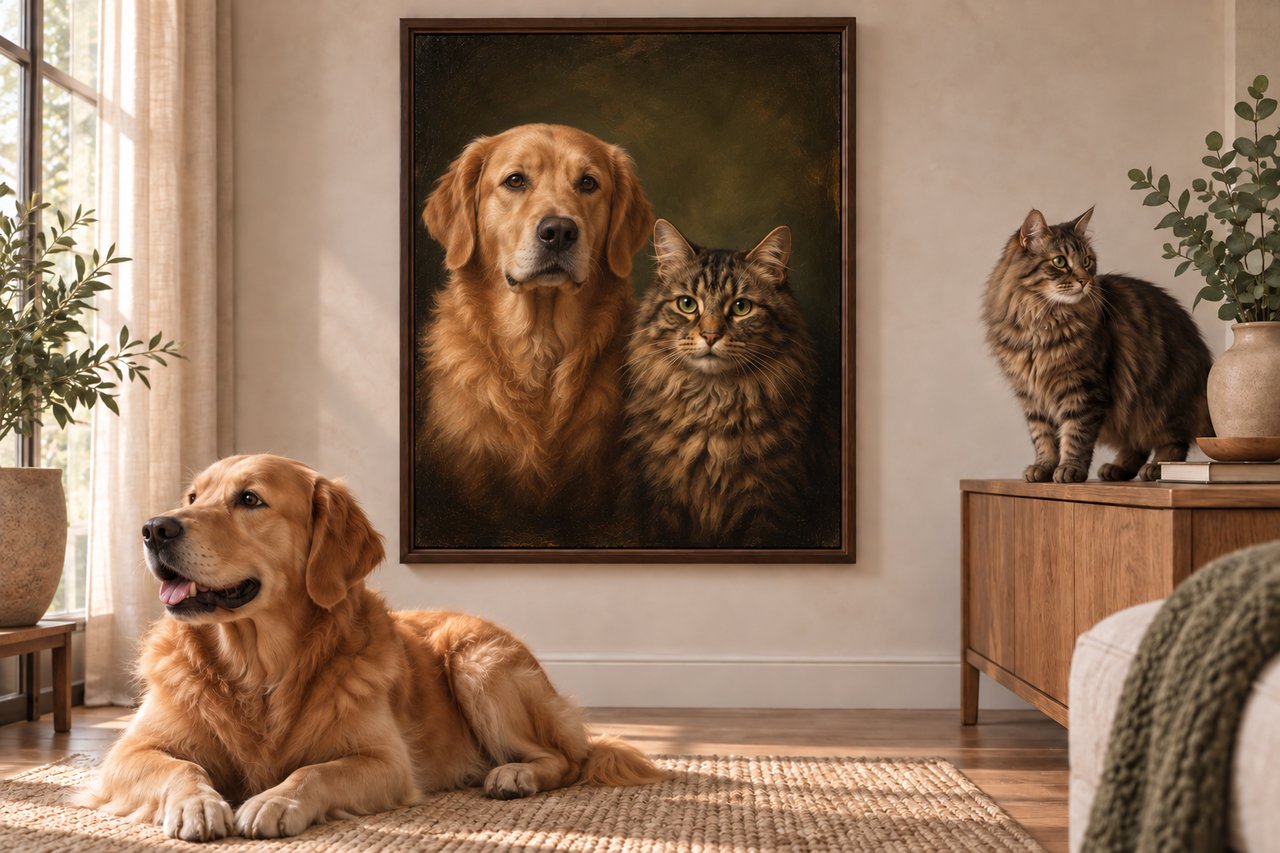
A multi-pet portrait can bring two pets into one piece of art even when you do not have a perfect photo of them together. The best result starts with one clear image of each pet, similar camera angles, and a composition that keeps their real size and relationship believable. At Yours, Theo, you can create a two-pet portrait from one shared photo or separate photos, then choose from the styles that are ready for a pair.
You do not need one perfect group photo
Anyone who has tried to photograph two animals at once knows the problem. One looks at the camera while the other turns away. The cat leaves. The dog moves. By the time both faces are visible, the light has changed or the photo is blurred.
A good multi-pet portrait does not depend on that lucky moment. Separate photos can be more useful because you can choose the expression that feels most like each pet. The artwork can then place both animals in one considered composition.
One shared photo is still helpful when it shows their natural size difference or the way they sit together. Think of it as context rather than a requirement.
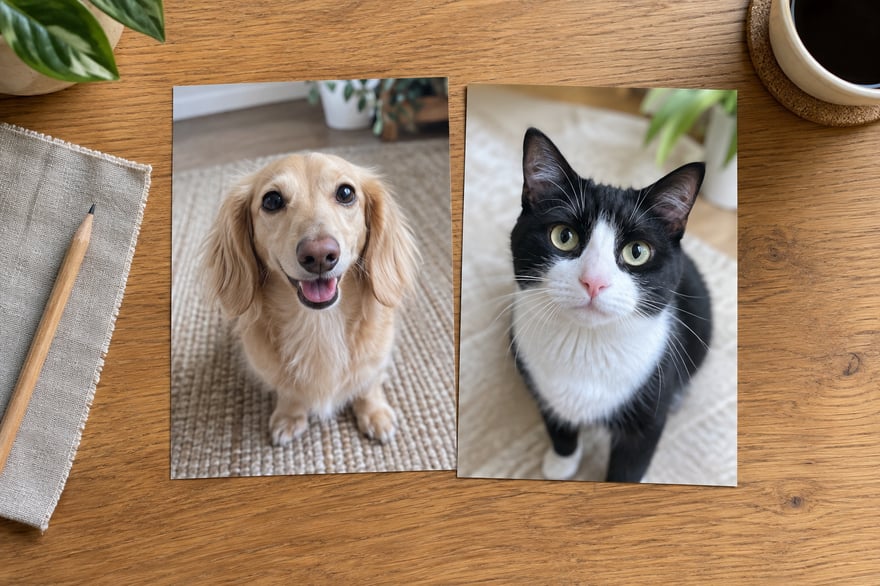
Choose one clear photo for each pet
Start by judging every pet separately. A strong source photo shows the eyes, ears, coat markings, and natural expression clearly. A recent phone photo is usually enough when the face is sharp and well lit.
Try to choose photos with:
- The camera close to the pet's eye level
- Soft daylight or even indoor light
- The full head and both ears visible
- Sharp eyes and recognizable coat details
- A familiar expression rather than an unusual split second
If one image hides an important marking, add another clear reference. Avoid screenshots, beauty filters, and tiny images downloaded from social media when the original file is available. Our guide to choosing the best photo for a pet portrait covers the basics in more detail.
Match the angle and lighting when you can
Separate photos do not have to be identical, but they should feel compatible. Two eye-level images usually combine more naturally than one photo taken from above and another taken from the floor. Similar light also helps the coat colors and shadows feel as though they belong in the same scene.
Do not discard the clearest photo only because the background is different. The pet matters more than the room behind them. When choosing between options, prioritize a sharp, recognizable face first, then look for a similar angle and light.
Keep their real proportions
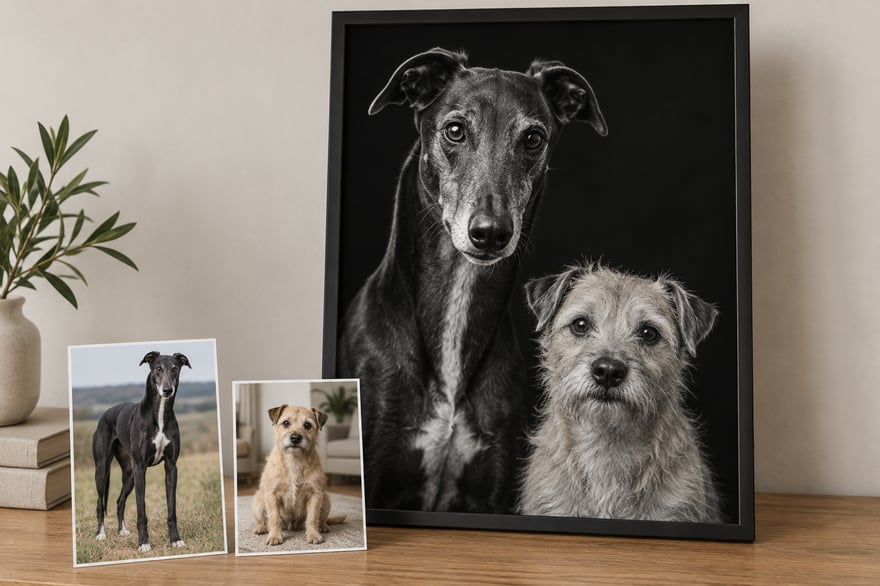
A balanced portrait does not mean making both pets the same size. If a greyhound lives with a small terrier, that contrast is part of how the pair looks together. Flattening the difference can make both animals feel less familiar.
If you have any photo showing the pets side by side, keep it as a size reference. You can also note which pet is taller, who usually sits in front, or whether they tend to stay close. Those small details help the final group feel like your household rather than two unrelated portraits placed next to each other.
Choose a style with room for both faces
The best multi-pet style gives both animals enough visual space. A clean painted background can keep attention on their expressions. A detailed scene can work too, as long as costumes, props, or scenery do not compete with the faces.
At Yours, Theo, the picker shows styles that have been prepared for two pets. That matters because a composition designed around one animal does not always become better by squeezing in another. Start with the pair-ready options, then choose a mood that suits both pets and the room where the portrait will live.
If you are deciding between soft, modern, dramatic, or classic artwork, use our pet portrait style guide. For a gift, choose the recipient's taste rather than assuming both pets need the most playful style.
Pick a size that keeps both pets visible
Two faces need a little more breathing room than one. A portrait that looks clear on a phone can feel cramped when printed very small. The intended wall should guide the choice.
A medium print is flexible for a hallway, office, or gallery wall. A larger piece works when the shared portrait will be the main artwork above a console or sofa. Before ordering, measure the available wall and remember to include the outside dimensions of the frame. The pet portrait sizing guide can help you match the artwork to the room.
A quick checklist before you start
Before creating a two-pet portrait, check that:
- You have at least one clear photo of each pet
- Both faces are sharp enough to see the eyes and markings
- The camera angles are reasonably compatible
- You know how their real sizes compare
- You have chosen a style that supports a pair
- The planned print size gives both faces room
You do not need perfect photos. You need enough clear, honest information for each pet to remain recognizable.
Common questions about multi-pet portraits
Can two pets be in one portrait?
Yes. Yours, Theo supports two-pet portraits in pair-ready styles. The final artwork can include two dogs, two cats, or a dog and cat together.
Can I use separate photos for a multi-pet portrait?
Yes. Choose a clear image for each pet. Similar angles and lighting help, but a strong likeness in each individual photo is more important than matching backgrounds.
Is one group photo better than separate photos?
Use a group photo when both pets look clear and natural. Otherwise, separate photos usually give you a better expression for each animal. A casual group photo can still help show their relative size.
Should both pets be the same size in the artwork?
Usually not. Keeping a believable size difference makes the portrait feel more like the pets you know.
What if one pet has passed away?
You can use an older photo and bring both pets together in one portrait. Choose the clearest image you have, and approach the composition as a remembrance rather than trying to recreate a moment that never happened. Our pet memorial portrait guide offers more gentle ideas.
Create a portrait of them together
A multi-pet portrait works when both animals still feel like themselves. Start your portrait, upload the clearest photos you have, and explore the styles made for two pets. You can see how the process continues in our guide to how a pet portrait is made.