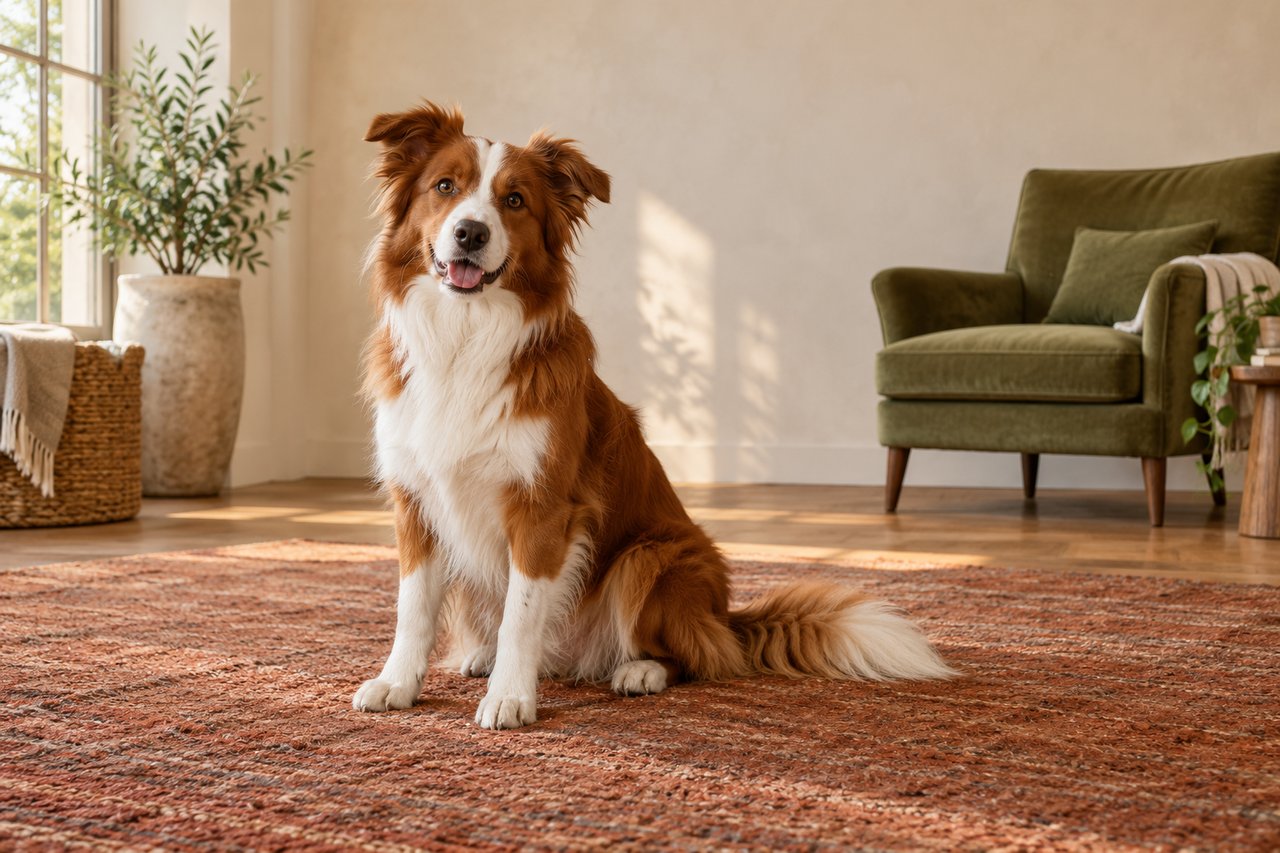
Choose a pet portrait headshot when you want the face to hold your attention. Choose a full-body portrait when the way your pet stands, sits or carries their tail belongs in the picture too. Before ordering, check that the composition you want fits the chosen scene, not just the photograph you upload.
There is also a useful middle ground: head and shoulders, with enough chest to show a familiar white patch or soft ruff. You do not have to choose between a floating face and every last paw. Start with what you would be disappointed to lose.
Pet portrait headshot or full body: what are you choosing?
You are choosing how much of your pet appears within the artwork. That is separate from the print size, the painting style and the shape of the frame.
A large print can contain a close face. A small print can contain a whole dog. Neither tells you how much room the eyes will have in the finished piece. Likewise, a full-body photograph does not necessarily produce a full-body portrait when the chosen theme is built around a closer composition.
Write down two things before browsing: the feature you most want to notice, and anything that must remain visible. For example, "I want her expression to be the first thing I see, but please keep the white patch below her chin." That gives you a clearer starting point than asking for the largest crop possible.
When does a head-and-shoulders portrait feel right?
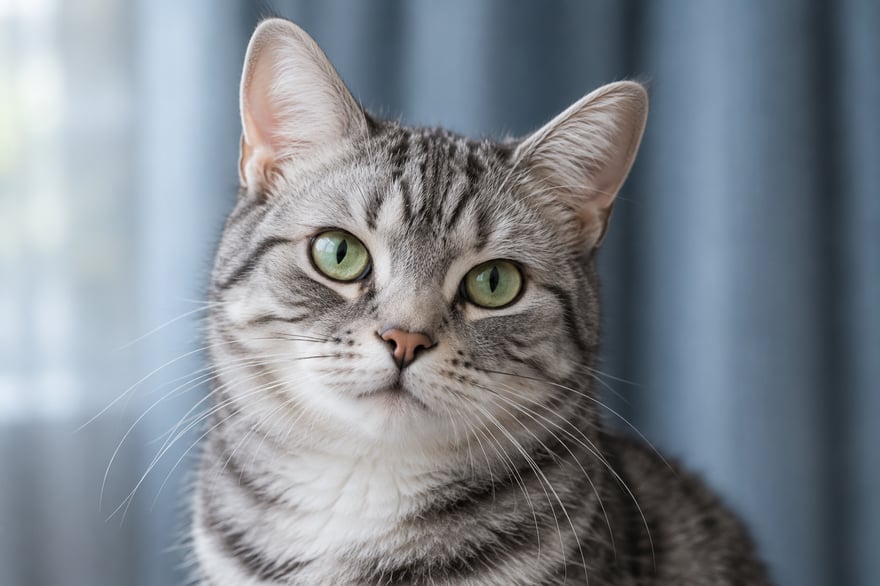
Think of the look your pet gives you from the other end of the sofa. If that is the moment you want, a closer composition gives it room. The turn of an ear, the shape of a muzzle or the little change around the eyes can become the center of the piece.
Decide where the lower edge should fall. A crop just beneath the chin feels different from one that includes the neck and upper chest. Keep enough surrounding shape that the head feels comfortably placed, with breathing room around the ears.
For a cat with a generous ruff, that fur may belong to the familiar outline as much as the face does. For a dog with a distinctive chest patch, a slightly wider head-and-shoulders view may preserve what you love without including the whole body.
When would you miss the rest of the body?
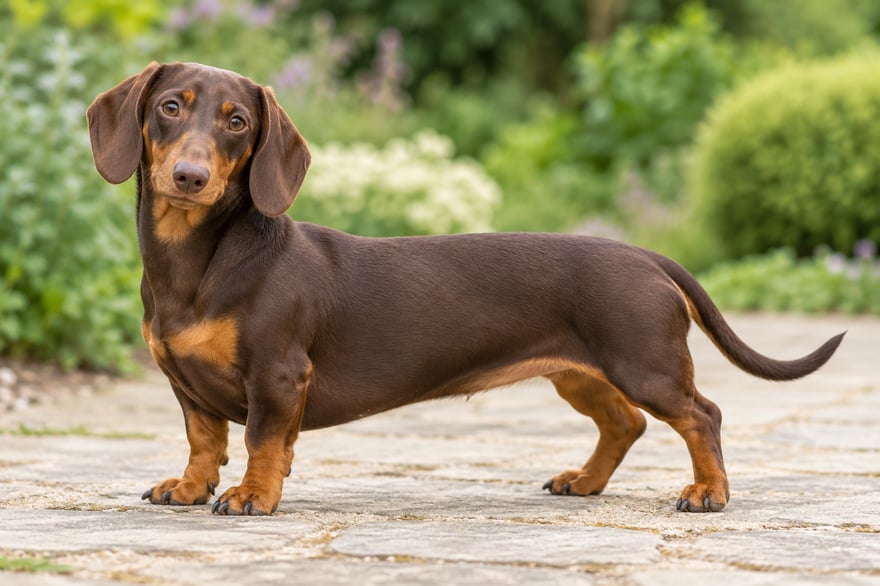
Imagine covering the lower half of your favorite photograph with your hand. Does it still contain the reason you chose it? If the answer is no, the body probably deserves space in the portrait.
Perhaps it is a dachshund's long outline, a cat's tail wrapped around its feet, or the particular way your dog plants two front paws. These are composition choices, not reasons to request every possible detail. Tell the artist which part of the outline matters and let the rest support it.
For a whole-body reference, check the ground beneath the paws as well as the pet. A foot disappearing into grass can be hard to understand. Keep the original wider photograph, even if you also make a cropped copy to explain your preferred layout. Our photo selection guide covers clarity and useful references.
How can you check whether the face will look too small?
Try a rough layout before committing. This is a planning exercise, not a prediction of the finished artwork.
- Make two copies of one photograph. Keep the original untouched.
- Place a closer crop in one rectangle and a wider view in another rectangle of the same shape and size.
- View them at roughly the size you intend to display, on paper if practical. Avoid comparing one enlarged on your phone with the other as a tiny thumbnail.
- Step back to where you would usually see the portrait. Notice which details you can still enjoy without moving closer.
If you love the whole-body version but keep leaning in to see the face, discuss a larger print or a tighter composition. If the room only has space for a smaller piece, you may prefer to give the face more of it. Our portrait size guide helps with the physical wall space.
Will the selected theme keep your chosen crop?
Look at the scene before assuming that it will. A reference supplies information about your pet; the theme also shapes the result. Cropping your upload tightly is not a reliable instruction to remove the body from the finished scene.
Compare the preview with your must-keep list. If a natural stance or an exact composition is essential, discuss it through our custom portrait commission, where an artist develops the scene with you.
For a printed Yours, Theo portrait, the initial preview helps you choose a direction. An artist then refines the piece with you, and you approve it before printing. The portrait buying guide explains that process. Bring composition questions into the conversation early, while the direction is being settled.
What should you put in the brief?
Keep it specific and short:
Please show him sitting, including both front paws and the curve of his tail. His face should still be easy to notice. The garden can be simplified. If that leaves him too small in this scene, please show me a closer option before we settle the composition.
Say which details are essential and which are flexible. A second photo can clarify a paw marking, but it should not silently replace the pose you selected. Ask the studio how to share supporting references.
Common questions
Can a face-only photo become a full-body portrait?
Ask before ordering. It does not show the body's proportions or markings. Another photograph of the same pet can help; otherwise, discuss what would need to be interpreted.
Does full body mean a landscape picture?
No. A seated pet can fit a vertical picture well. A long sideways pose needs more horizontal room, so check the proposed layout rather than relying on the label.
Does a full-body portrait always cost more?
There is no universal rule. Check the actual service, size and finish, and confirm any custom composition work before paying.
Ready to start
Choose the details you would miss, then start your portrait. The right composition gives those details a comfortable place in the picture.