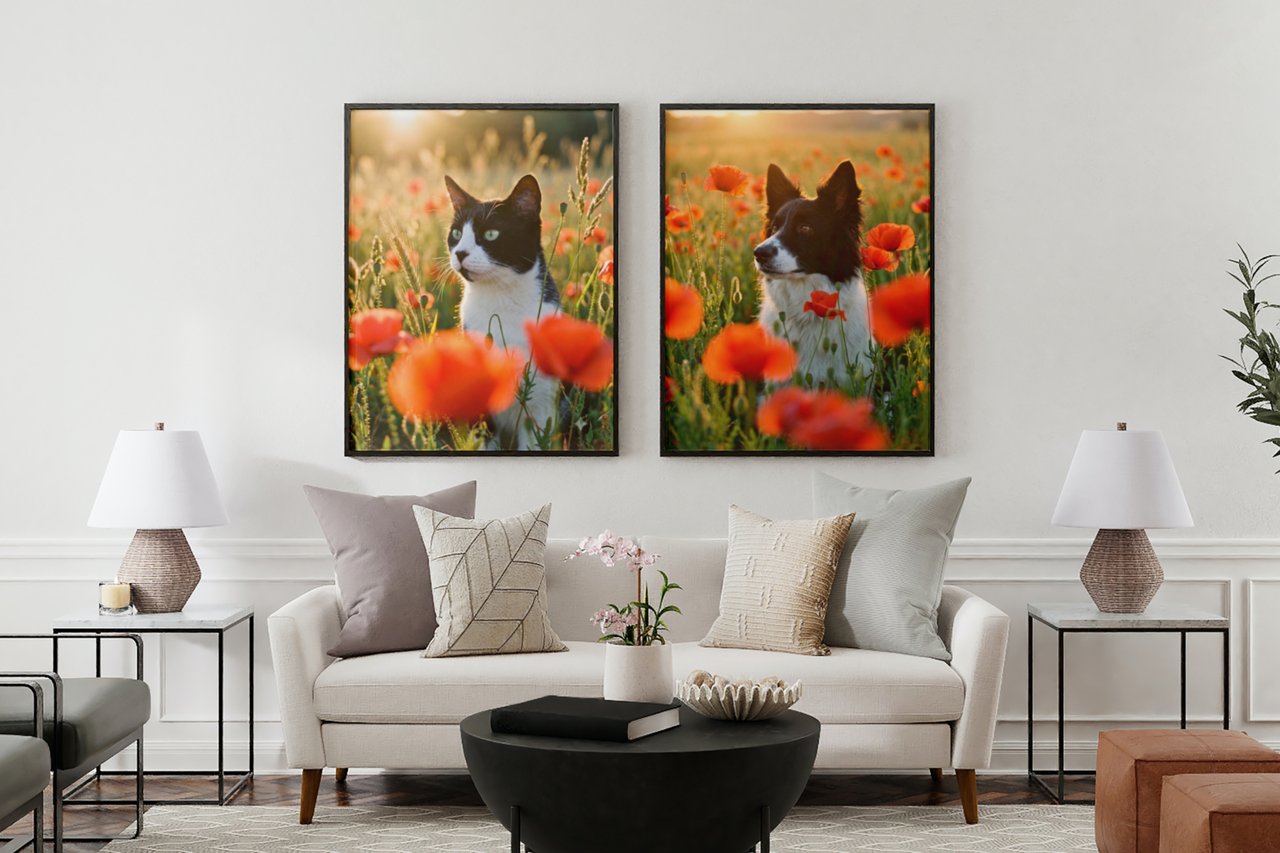
Wondering what size pet portrait to get? The honest answer is that the right size depends on the wall it will hang on, not on the pet. The most common mistake is going too small, which leaves the art looking lost on a big wall. As a quick answer: above a sofa or bed, go large and aim for about two thirds the width of the furniture. On a standalone wall, a medium to large piece works. For a gallery, use several smaller matched pieces that read as one group.
Here is how to choose the size with confidence, using a few simple rules.
Start with the wall, not the pet
A portrait does not live in a vacuum. It hangs in a real spot, and that spot sets the size. So measure the open wall space before you think about anything else. A piece that fills roughly the right share of the wall looks intentional. A piece that is too small looks like an afterthought, and that is the number one regret people have. When you are torn between two sizes, size up.
The two-thirds rule above a sofa or bed
If the portrait hangs over furniture, use the two-thirds rule: the art should span about two thirds the width of the sofa or bed below it. A 90 inch sofa wants roughly 60 inches of art, whether that is one large piece or a group hung together. Leave about 6 to 10 inches between the top of the sofa and the bottom of the frame so the two feel connected rather than floating apart.
A simple small, medium, and large guide
You do not need exact measurements to get this right. These rough tiers cover almost every spot in a home:
- Small, around 8 by 10 to 11 by 14 inches: shelves, desks, a cluster on a gallery wall, or tight spots like a hallway.
- Medium, around 16 by 20 to 18 by 24 inches: a standalone stretch of wall, an entryway, beside a doorway, or above a console.
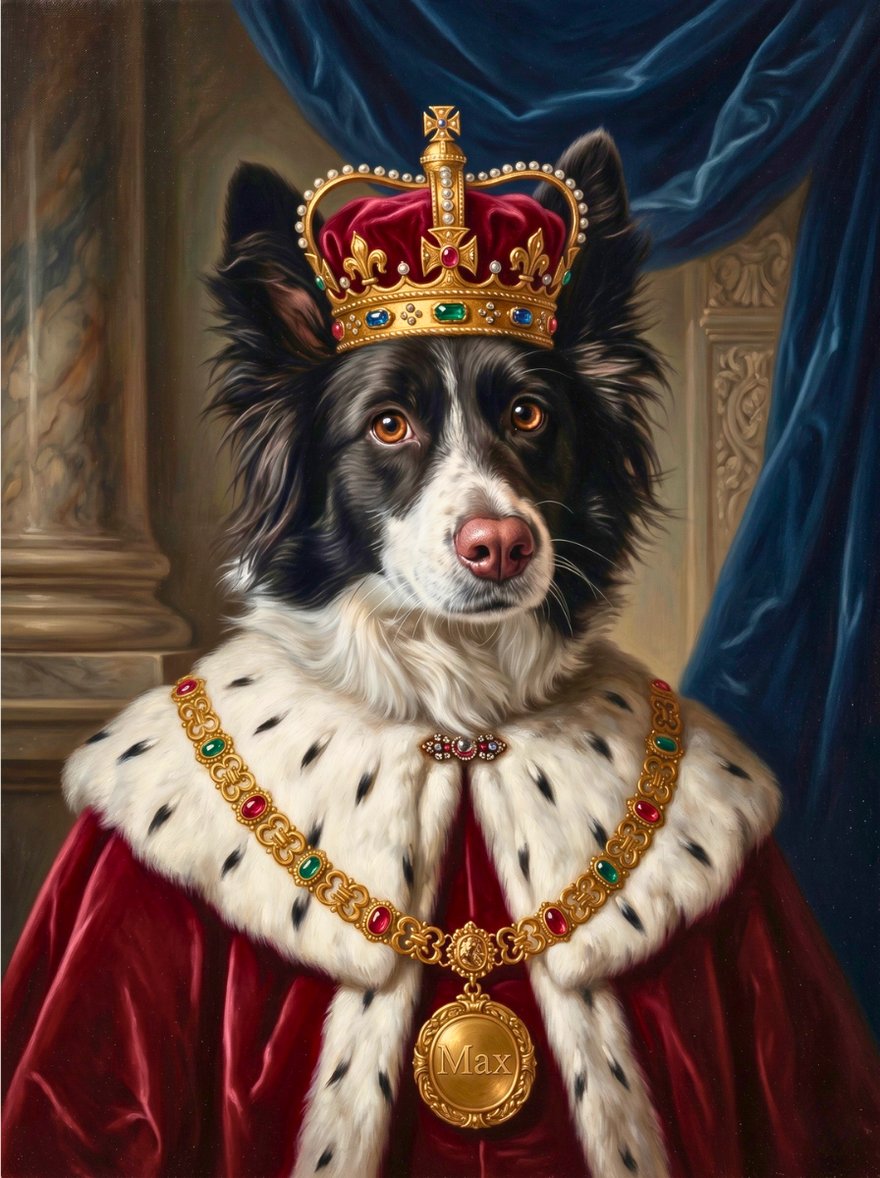
- Large, around 24 by 36 inches and up: the statement piece above a sofa, bed, or mantel, and any big open wall that can carry it.
One more factor is viewing distance. A room you take in from across the space, like a living room, can hold a bigger piece than a spot you stand right next to, like a narrow hall.
Hang it at eye level
Size and placement work together, so a quick word on height. Center the portrait at about 57 to 60 inches from the floor, which is comfortable eye level for most people. Over furniture, the sofa or console will raise the bottom edge, but try to keep the center of the piece near that height. Our room-by-room guide to hanging a pet portrait covers placement in more detail.
One statement piece or a gallery wall?
There are two good paths, and neither is wrong.
A single large piece is bold and simple. It makes your pet the clear focal point and it is the easiest look to get right. A gallery of smaller pieces is more flexible and works beautifully for more than one pet, or for building a little wall over time. Treat the whole group as one shape and make its total width about two thirds of the furniture below, with even gaps of around 2 to 3 inches between frames.
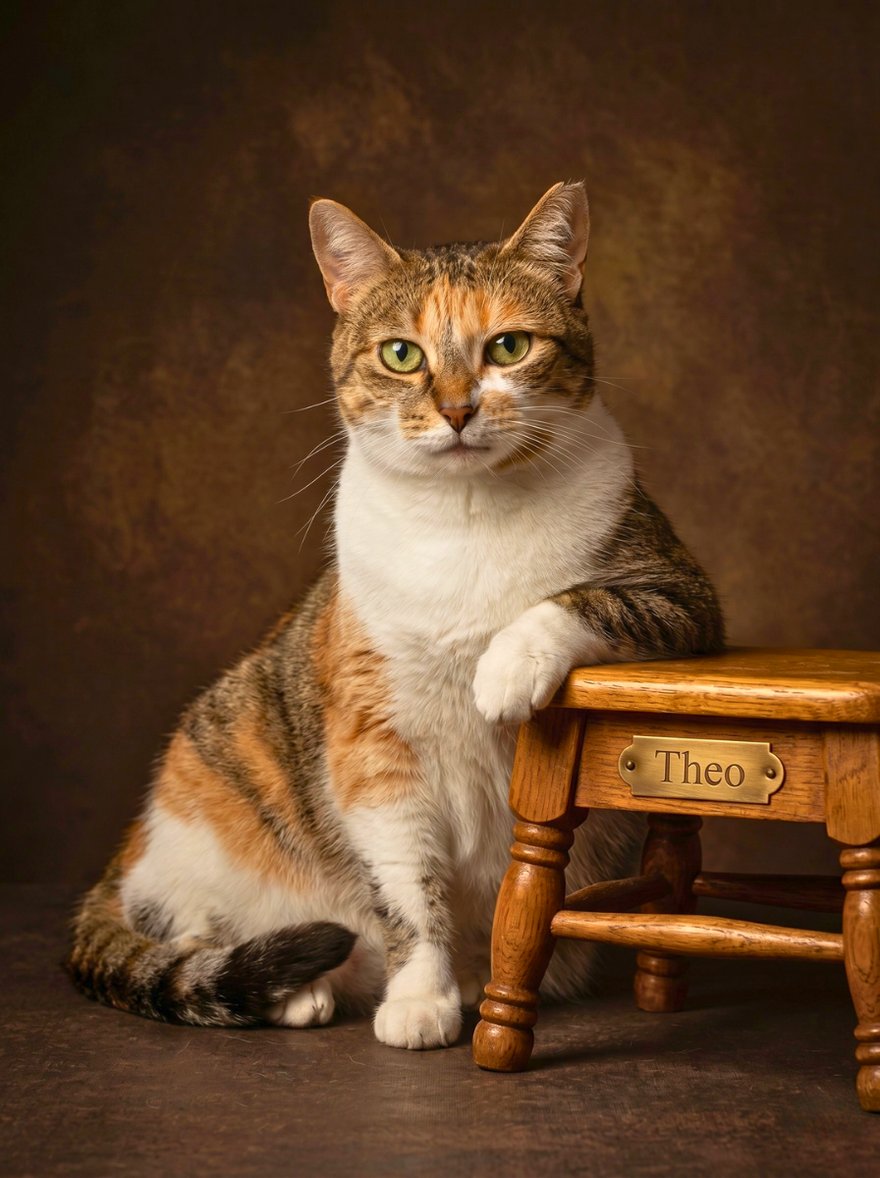
If you have more than one pet, you can give each of them their own piece in a matched set, or bring them together in one larger portrait.
A quick note on photo quality and big sizes
The larger you print, the more the original photo matters. A small piece is forgiving, but a large statement portrait shows every detail, so it pays to start from a sharp, well lit photo. If you are planning to go big, our guide on how to pick the best photo for a custom pet portrait explains exactly what to look for.
The tape test
Here is the foolproof trick that removes the guesswork entirely. Cut some painter's tape into the outline of the size you are considering and stick it on the wall. Live with it for a day and walk past it a few times. You will see right away whether it feels too small, too big, or just right, all before you order anything. Most people tape up one size, then decide to go a size larger.
Common questions
What is the most popular pet portrait size? For a single piece on a normal wall, a medium to large size in the range of 16 by 20 to 24 by 36 inches suits most homes. Above a sofa, lean to the larger end.
Can a pet portrait be too big? It is far more common to go too small. A piece can overwhelm a tiny wall, but if you follow the two-thirds rule above furniture, you will stay in the safe zone.
What size works in a small room or hallway? Smaller pieces, around 8 by 10 to 16 by 20 inches, or a tidy gallery of small frames. In tight spaces you stand close to the art, so you do not need a large piece to feel its impact.
Does the style change the size I should pick? A little. Bold, busy styles carry a large wall well, while quiet, simple styles look right at almost any size. If you are still choosing a look, see how to choose a pet portrait style.
Ready to start
Pick your spot, run the tape test, and choose the size that fills it with confidence. Start your portrait, upload your favorite photo, and preview your pet before you decide. When the size fits the wall, the whole room feels finished.