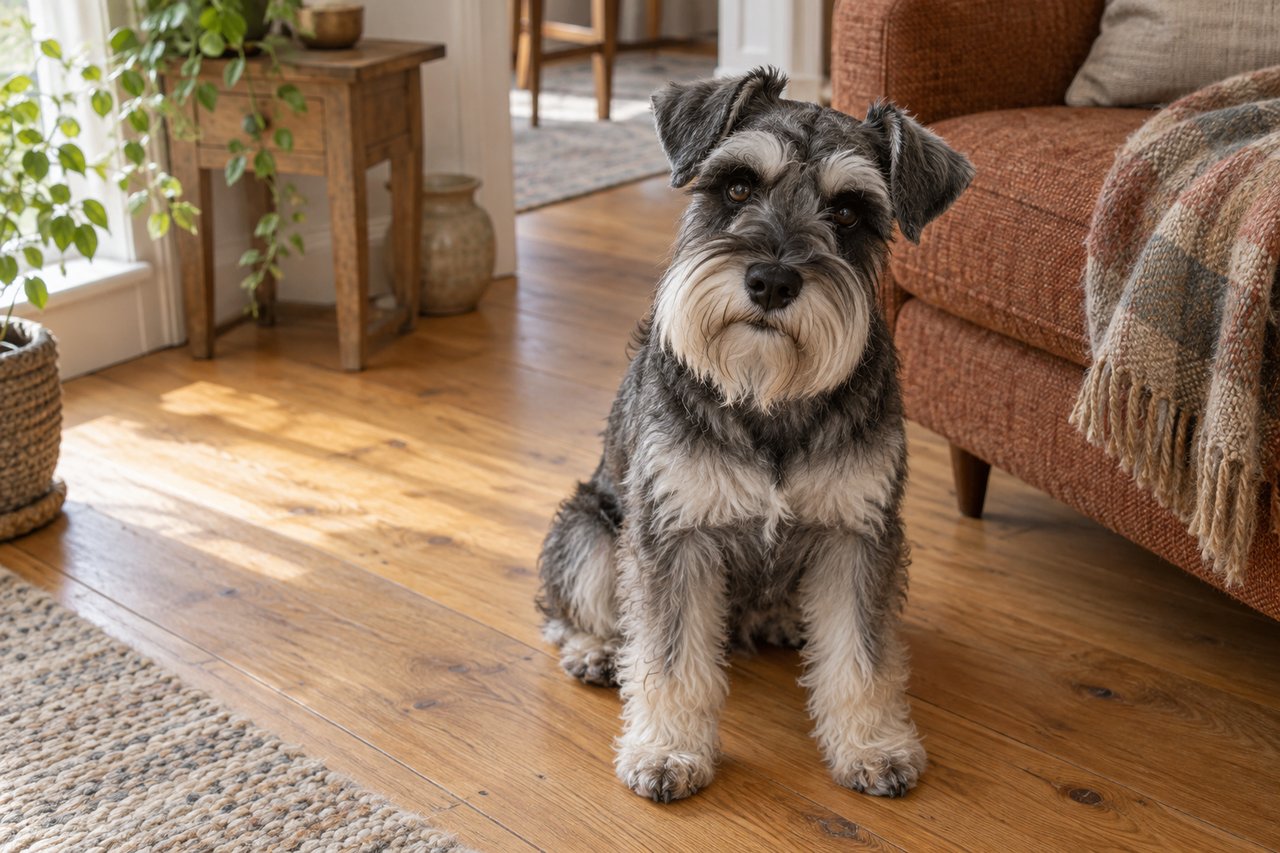
If you are planning a dog portrait before or after grooming, choose the photograph that shows the coat and face you want to remember. A fresh haircut is useful when it is the look you love, but it is not a requirement for a good portrait reference.
Perhaps your dog has two very familiar faces: the neat one coming home from the groomer and the fluffier one watching you make breakfast a few weeks later. Both belong to the same companion. The choice is which one you want to see on your wall.
Dog portrait before or after grooming: which photo should you use?
Start with recognition, then check clarity. Put two or three photographs beside each other and ask which looks most like the dog you picture when you say their name.
- Choose the freshly groomed photo if you love the shorter muzzle hair, tidy ears or familiar trimmed outline.
- Choose the longer-coated photo if the full beard, soft curls or sweeping ear hair are part of the face you know best.
- Choose an older photo if it records a particular haircut you still love, provided the face is clear enough to use.
Neither version is automatically more suitable for a formal or playful theme. A fluffy dog can belong in a quiet painting; a neatly trimmed one can be wonderfully comic. Choose the dog's appearance first, then the scene.
For a gift, ask the recipient which photograph feels most like their dog. The latest salon photograph may be beautifully lit without showing their favorite look.
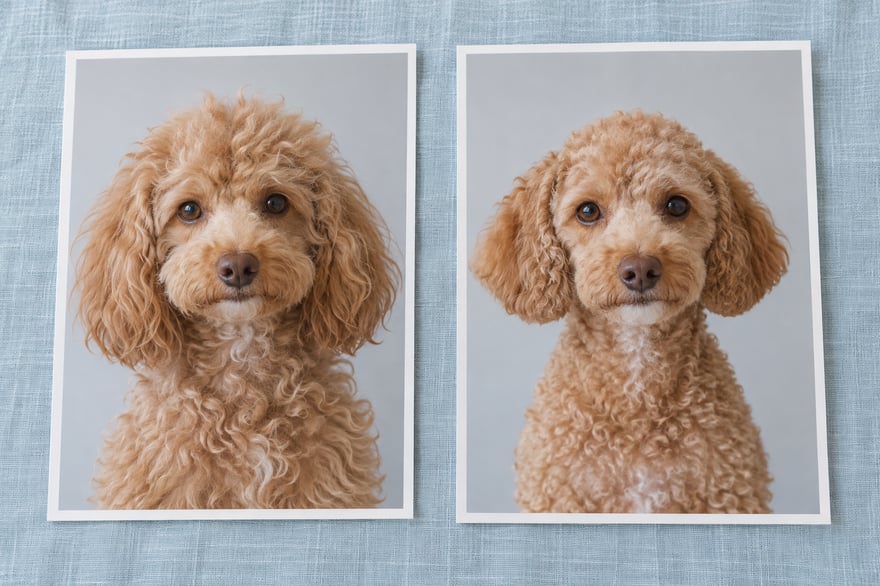
What changes when the coat is shorter?
Look at the outline of the head, not just how much hair is visible. Fuller cheeks can make a face appear rounder. Shorter hair around the muzzle can make the nose look more prominent. Long ear hair can hide where the ear itself ends.
Use three small checks:
- Face: how much eyebrow, cheek and beard hair belongs in the portrait?
- Ears: do you prefer their compact outline or the longer feathering?
- Body: if the selected scene shows the chest or legs, which coat length should those areas have?
Describe what you like in ordinary words. "Keep the full beard from this photo" is clearer than a haircut name that different people may interpret differently. You do not need grooming vocabulary to explain the familiar face.
Should you book a grooming appointment just for the portrait?
You do not need a new appointment if you already have a useful photograph. Start by looking through pictures taken after previous grooms and during the weeks between them.
If you want to take a new reference, choose a comfortable moment when your dog looks the way you want the artwork to show them. There is no single number of days after grooming that suits every dog or every person's taste.
Keep their normal care needs separate from the artwork decision. There is no reason to postpone needed grooming to preserve a look for a picture. An existing photo can carry that look into the portrait.
You also do not need to change the haircut to suit a theme. Our dog portraits page explains how a photo becomes the starting point for a new scene.
What if longer hair hides the eyes?
A loved fringe can belong in the portrait, but an unclear eye gives the studio less information about its shape and expression. Look for another photograph of your own dog where those details are visible.
For a new reference, use soft daylight and wait for a natural head position that lets you see the face. Keep both ears and the end of the beard inside the photograph. Avoid cropping tightly just because you want to inspect the eyes.
You do not need to trim hair yourself for the picture. If the favorite long-coated photo hides a detail, keep it as the coat reference and ask whether a clearer supporting photo will help. Our photo selection guide covers lighting, focus and framing in more detail.
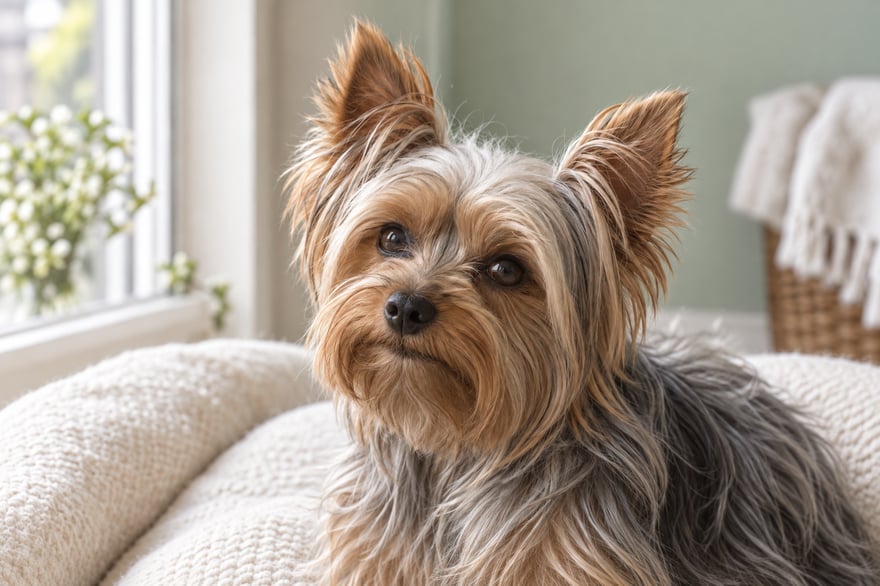
How do you explain different haircuts in your reference photos?
Give each photograph a job. Choose one main image for the overall appearance, then identify what any additional photograph explains. Ask the studio how to share supporting references instead of assuming that every upload will be combined automatically.
For example:
Please use the longer beard and ear hair in the first photo. The second photo is only to show his eye shape and the small pale patch under his chin. I do not want the shorter haircut from that photo.
If you want to combine details from different haircuts, say so and ask what is possible before committing. Do not leave the artist to guess which parts of each image you prefer. Another dog's haircut photo can suggest a general shape, but it cannot establish your dog's own face or markings.
When reviewing the artwork, check the cheek outline, beard length and ear hair against your chosen reference. If something feels wrong, name the feature: "The cheeks are too rounded" gives a clearer direction than "He looks different." Our portrait preview guide helps you organize that feedback.
Common questions
Can I use a photo from before my dog's latest haircut?
Yes, if that is the appearance you want to preserve. Tell the studio that the older coat length is intentional.
Will the portrait automatically make the coat tidier?
Do not assume it will. Explain whether you want the everyday texture preserved or a specific adjustment considered, then review the result.
Should I choose the haircut before choosing a theme?
It helps to settle the familiar face first. At Yours, Theo, an artist refines every printed portrait with you before approval. The portrait buying guide explains how the initial preview and artist refinement fit together.
Ready to start
Find the photograph that makes you think, "There you are," then start your portrait. Bring the beard, curls and familiar little details you want to keep.