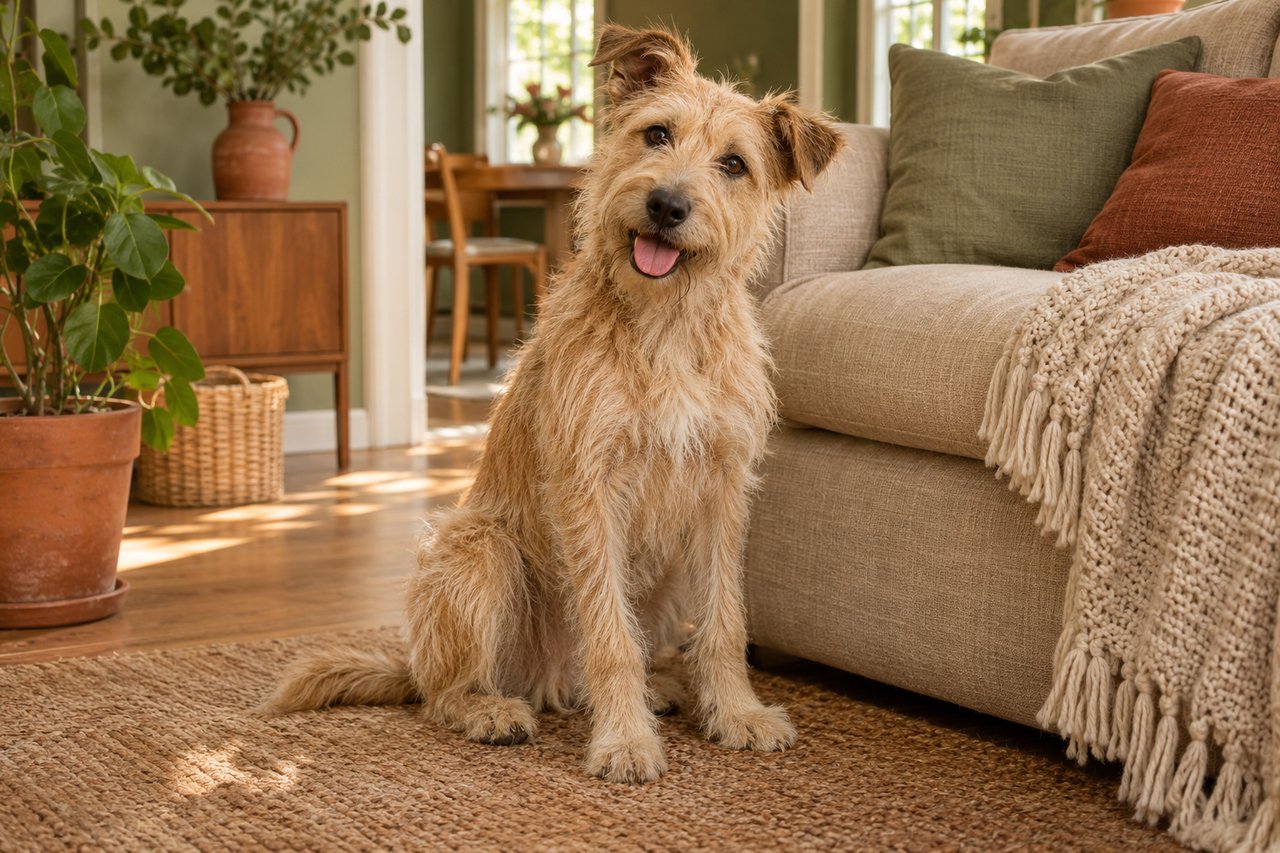
A dog portrait with the tongue out can be a lovely choice when that is the face you know best. A closed mouth works just as well when you want to keep the familiar outline of the muzzle. Choose the expression first, then check that your photograph actually shows the details the portrait will need.
There is no need to make your dog look more formal for the wall. Equally, a photograph does not need a visible tongue to feel affectionate. The useful question is smaller: when you look at this face, do you recognize your dog?
Dog portrait with tongue out or mouth closed: how do you choose?
Pick two photographs you like, one of each expression. Compare them at a similar size, with the whole head visible. Set aside the background for a moment and look at the eyes, ears and muzzle together.
Ask yourself what makes each photograph familiar. Perhaps the tongue sits a little to one side in the picture you love. Perhaps the closed mouth leaves a white chin patch visible. Those specific details are more useful than deciding that one expression looks happier or more elegant.
If you are choosing a gift, ask someone who knows the dog which face the recipient would recognize first. You can ask that without showing them the planned artwork. If neither photograph feels quite right, keep looking rather than combining two incompatible expressions in your head.
What should you check in a tongue-out photograph?
Look closely at the lower half of the face. You want to understand where the tongue ends, where the lips sit and how much of the chin remains visible. A blurred pink shape may carry a lovely memory, but it gives less information for a detailed portrait.
- Tongue outline: is the tip visible, or does it disappear into movement blur?
- Muzzle shape: can you follow both sides without a toy, hand or deep shadow covering them?
- Teeth: are the visible details clear enough to interpret, rather than bright, indistinct patches?
- Chin and markings: does the expression hide a feature you particularly want to keep?
Keep the original image. Avoid painting over saliva, whitening teeth or using a face filter to tidy the reference. Explain anything you would like simplified separately, so the studio can distinguish a requested change from the dog's actual features.
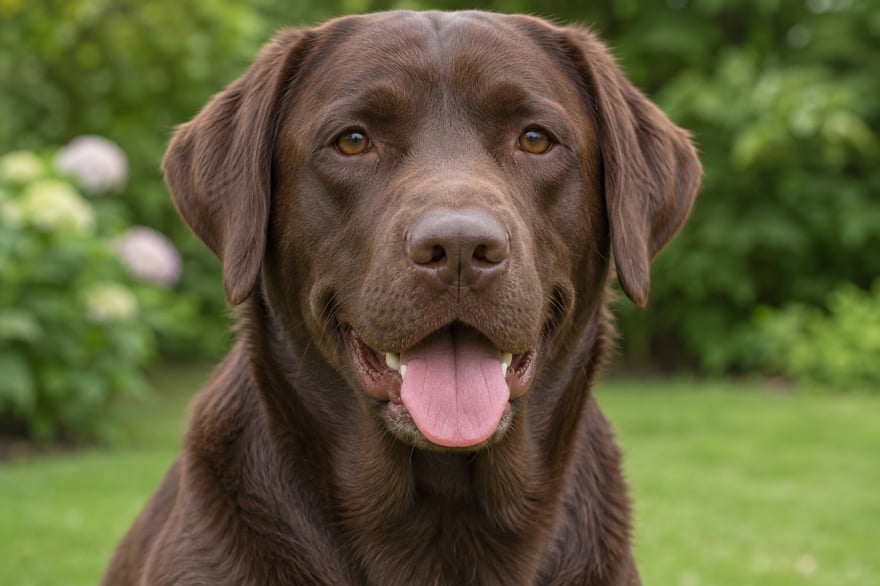
Can the artist close the mouth or remove the tongue?
Ask before ordering if that change is essential. Removing the tongue is not simply erasing a pink area. The finished picture still needs a believable lower muzzle, lip line and chin, and the open-mouth photograph may not show their resting shape.
A second photograph of the same dog with a naturally closed mouth is the most useful starting point. Choose a similar viewing angle if you have one. A side view can explain the profile, but it may not settle what the mouth looks like from the front.
Give each reference a clear job. For example: “Please use the first photograph for his ears and head angle. I would prefer a closed mouth, and the second photograph shows his lip line and white chin. Please let me know whether these references are enough.”
That is a request to discuss, not a promise that any two photographs can be combined. If you only have the open-mouth image, ask what would need to be interpreted and decide whether keeping the original expression feels more faithful.
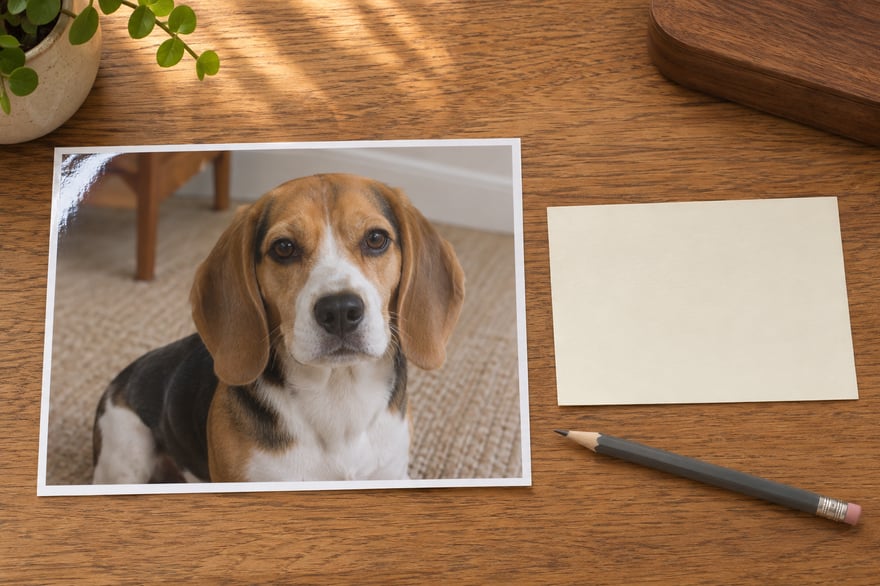
How can you get another expression without forcing it?
Take a few photographs during an ordinary quiet moment in good light. Stay at your dog's level, leave room around the ears and wait for a natural pause. You do not need a long session or a particular performance.
Do not hold the mouth shut, pull at the lips or make your dog exercise to produce a tongue-out photograph. If the expression you want does not happen, try another time or use an existing picture. The portrait should begin with a comfortable moment.
Our photo selection guide covers lighting and sharpness. Here, the goal is simply to give yourself a real choice of expression, rather than asking the finished artwork to invent one.
What should you check before the portrait is printed?
Look at the whole face first. Then compare the mouth with the reference at a similar scale. Check the tongue's length and direction, the shape of the lips, the visible teeth and the space between nose and chin. A small change in that area can make an otherwise familiar face feel different.
Describe the visible difference when asking for an adjustment. “The tongue extends farther below the chin than in the reference” is clearer than “Please make him look happier.” Avoid asking for perfectly even teeth or a symmetrical mouth if those details do not match your dog.
At Yours, Theo, the initial preview helps you choose a direction. For a printed portrait, an artist refines the piece with you before approval and printing. Our portrait buying guide explains the process, and the preview review guide helps you organize feedback. Discuss an essential expression change before committing to a scene.
Common questions
Is a tongue-out photo unsuitable for a formal portrait?
Not automatically. Decide whether the expression belongs to the dog you want to see in that setting. Check the actual preview rather than assuming a formal theme requires a closed mouth.
Should visible teeth be removed?
Only if that is a deliberate choice you have discussed. Keep a clear reference and explain what matters to you, including any familiar unevenness you want preserved.
What if the only clear photo has the wrong expression?
Ask whether another, less detailed photograph can help explain the expression. Keep expectations tied to what the references show, especially when a new photograph is no longer possible.
Ready to start
Choose the face that feels familiar, keep the original photograph, and start your portrait. A small quirk can be the detail that makes the whole piece yours.