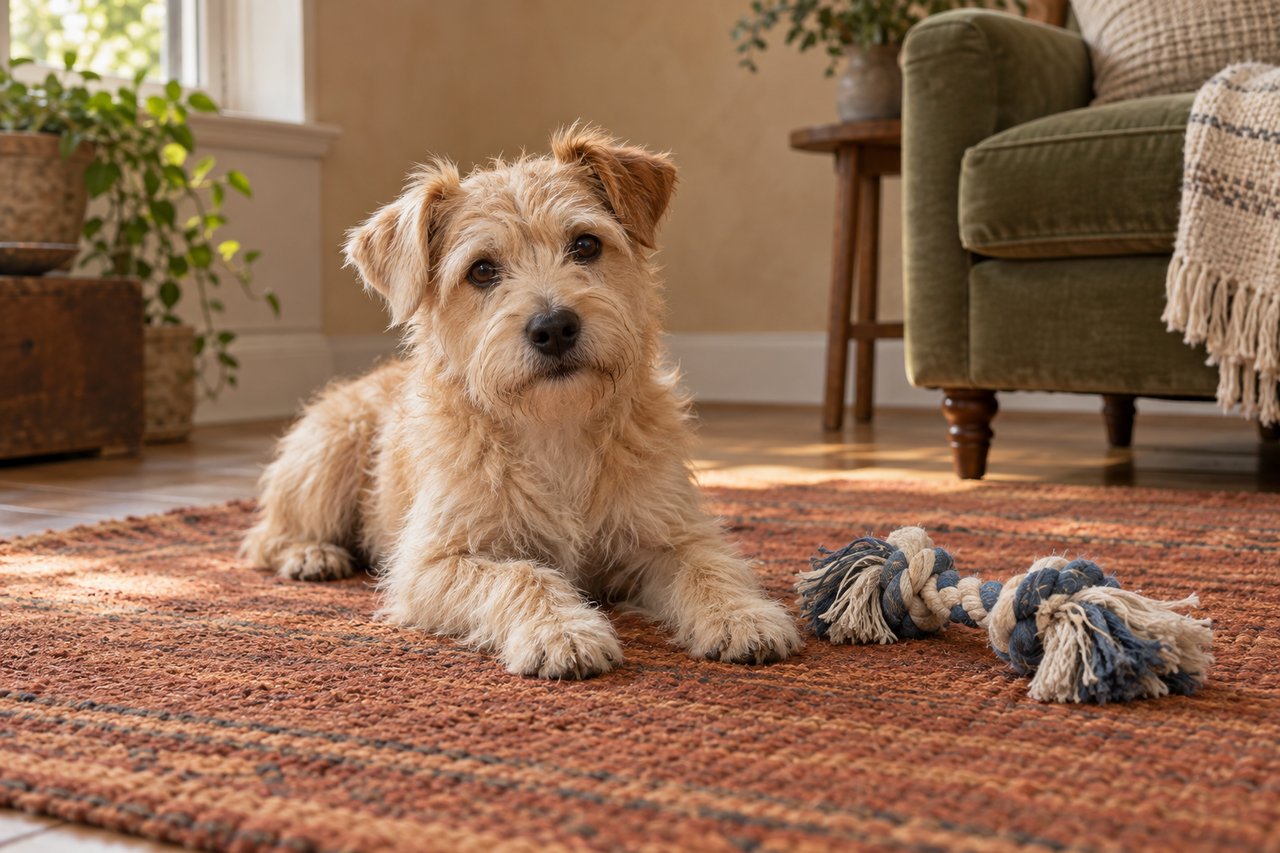
A dog portrait with a favorite toy starts with two clear subjects: the dog you know and the particular object you want included. Send a useful face photo, a separate view of the toy, and a short explanation of where it belongs. Confirm the request with the studio before assuming a selected theme can accommodate it.
Perhaps it is the blue rope left beside every chair, or the soft ball that appears whenever someone comes home. You want that small detail in the picture because it belongs to your dog's everyday life. Here is how to make the request clear enough to work from.
Can a dog portrait with a favorite toy work in any theme?
Look at the space available around the dog before settling on a scene. A close head-and-shoulders composition may leave little room for an object beside the paws. A wider composition may offer more space, but the toy still needs an intentional place.
Decide how important the object is before choosing:
- Essential: you would rather change the scene than leave out the toy.
- Preferred: you would like it included if the composition allows.
- Optional: the toy is a pleasant extra, but the face is what matters most.
That distinction gives the artist a useful starting point. It also prevents you choosing a theme you love, then discovering that the detail you care about needs a different approach.
At Yours, Theo, a theme provides the starting direction for a portrait. If the entire scene needs to be built around a particular idea, explore our custom portrait commission and explain the toy in your brief. Ask which route fits before placing an order.
Which details of the toy should you photograph?
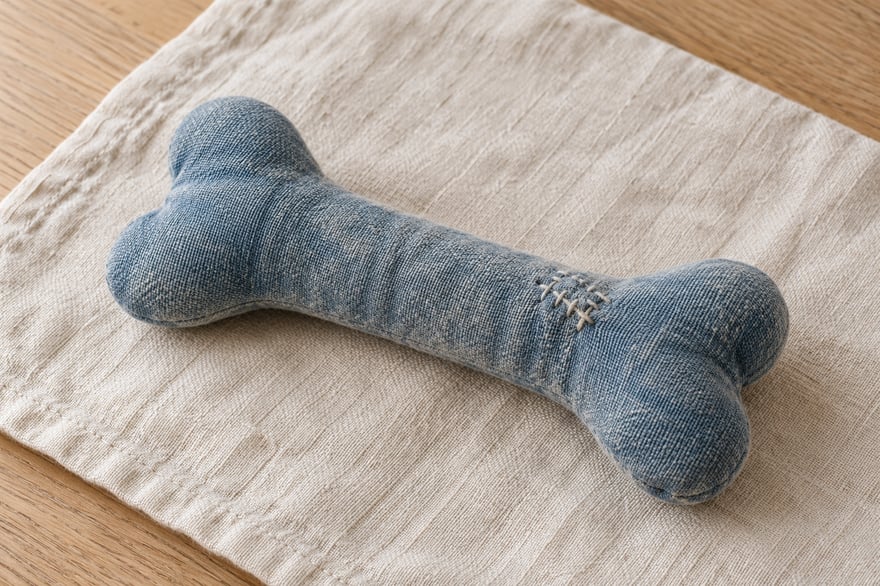
Put the actual toy on a plain surface in soft daylight. Take one photograph showing its complete outline, then a closer view of anything you want the artist to notice. Leave room around the edges so a loop, tail or knot is not accidentally cropped out.
Check the picture before putting the toy away. Can you distinguish its main colors? Is the far end visible? Does the image show whether it is flat, round or softly stuffed?
Choose just a few details that matter to you. A dark patch, an uneven knot or a familiar repair can be more useful to mention than a long description of the brand or product name. If you want a neater interpretation, say which changes are welcome and which details should stay.
What belongs in a small reference-photo kit?
Give each photograph a different job. Three useful views are easier to explain than a folder of twenty near-identical pictures.
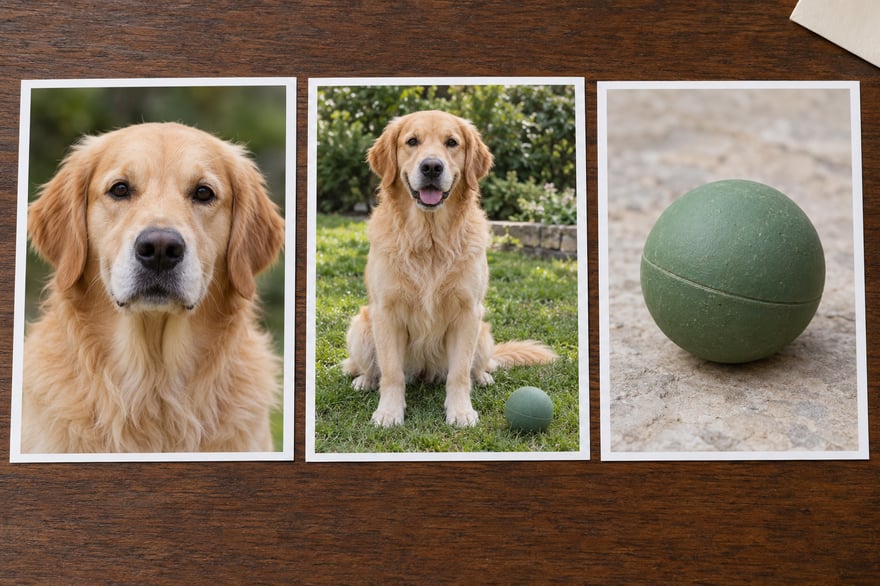
- The face reference: a clear photograph with the expression and markings you want preserved. The toy does not need to appear here.
- The toy reference: the whole object, plus a closer detail only if needed.
- The relationship reference: your dog beside or carrying the toy, showing its size in relation to the head, chest or paws.
The third photograph does not have to be the main likeness reference. Its job is to answer a different question: how large is this object beside this dog, and how do they interact?
Keep the original files and tell the studio which image serves each purpose. Ask how to send additional references rather than assuming the first upload accepts a whole set. Our photo selection guide covers the light, focus and framing to look for in the main face image.
How should you describe where the toy goes?
Write the placement as a simple instruction, then separate it from the details that must remain accurate. Avoid asking the artist to infer the whole scene from the phrase "include his ball."
A useful brief has four parts:
- Priority: is the toy essential, preferred or optional?
- Placement: beside the paws, held in the mouth, or elsewhere?
- Appearance: which color, shape and small details matter?
- Flexibility: what may the artist change to make the composition work?
For example:
The green ball is essential. Please place it on the ground beside his front paws, with a small gap so both are clear. The ball photo shows its color; the photo of them together shows its size. You can adjust the background, but please keep his face unobstructed. Let me know if this needs a different scene.
If you use left or right, explain whether you mean the viewer's side of the picture. A quick placement note can prevent a surprisingly large misunderstanding.
What if the toy hides the mouth or paws?
A carrying photograph may be exactly the moment you love. Keep it, but include a clear face reference if the object conceals the muzzle. Do not expect a hidden marking to be reconstructed accurately without another view.
If carrying the toy is not essential, consider asking for it beside the dog instead. This can make the face easier to inspect. You do not need to stage a new pose or persuade your dog to hold something differently just for the reference.
Before approval, check the contact points. Is the ball resting on the ground? Can you tell which paw is which? Does a rope pass behind the leg where intended? Then check that the dog's face still feels familiar. Our portrait preview guide explains how to turn those observations into clear feedback.
Common questions
Can I use an old photograph if the toy is gone?
Yes, use it as a reference and identify anything that is unclear. Ask what can be represented faithfully before requesting precise details the photograph does not show.
Should I send the physical toy?
Start with photographs. Do not post a treasured object unless the studio has explicitly arranged that with you.
Can the toy stay out of the final artwork?
Of course. It can help explain your dog's personality without appearing in the picture. Mark it as background information in your brief.
Ready to start
Choose the face you love, gather the toy references, and start your portrait. A few clear details help us understand what makes the picture yours.