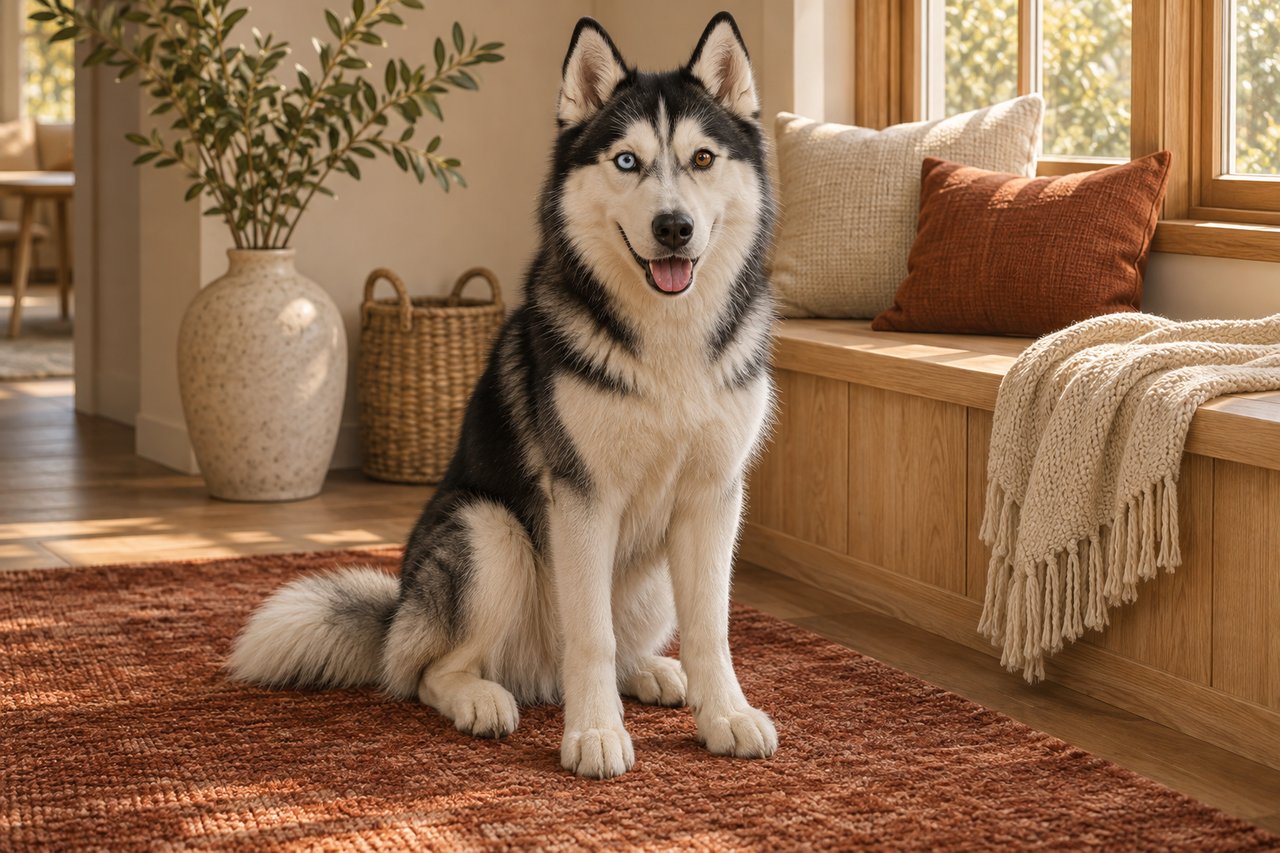
For accurate pet portrait eye color, send a clear reference of both eyes and describe each one from a stated viewpoint. If your pet has one blue eye and one brown eye, a short note tied to a specific photograph helps prevent the colors being swapped when the pose changes.
Those small differences can carry a surprising amount of recognition. The aim is not to make the eyes brighter or more perfectly matched. It is to keep the particular look you know from the other end of the sofa.
How do you record pet portrait eye color clearly?
Choose one photograph as your color reference. Look for a view where both eyes are visible and the colored part of each eye can be distinguished from the dark pupil and bright reflections. Keep the original file, even if you also make a closer crop for discussion.
Write down what you can actually see. “One blue eye and one brown eye” is a useful beginning, but it leaves the artist to work out which is which. “In the attached front-facing photo, the eye on the left of the image is blue” is much clearer.
If one eye contains more than one color, describe the visible pattern too. You might say that a brown patch sits near the lower edge of the blue iris. Do not ask the artist to make the whole eye blue simply because that is the easiest color to name.
Our photo selection guide covers the general lighting and sharpness checks. For this reference, concentrate on what makes each eye different.
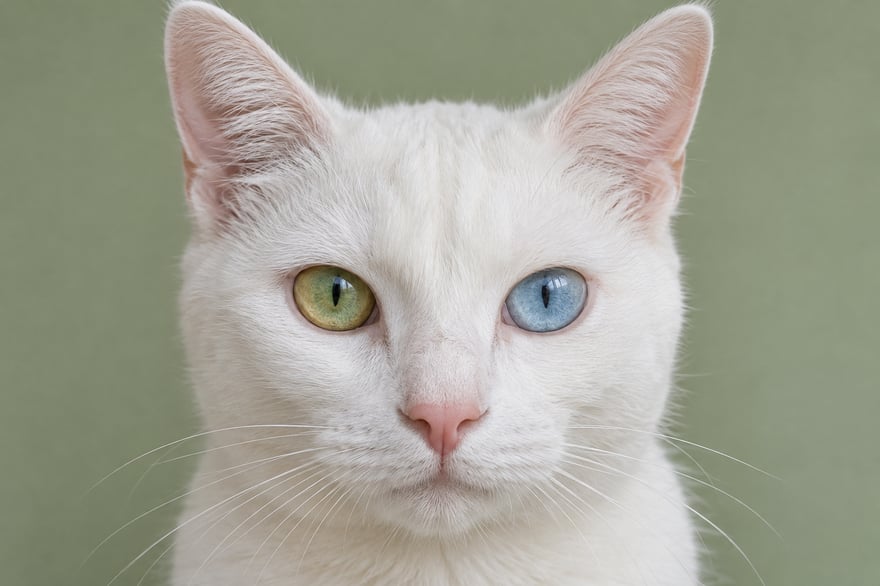
Whose left do you mean?
Your pet's left and the left side of a front-facing photograph are opposite sides. A note that only says “left eye blue” can therefore be read in two ways.
Use one convention throughout the conversation. The simplest is often to refer to the image you are both looking at:
Please use this photograph as the eye-color reference. On the left side of this image, the iris is blue. On the right side, it is brown. Please preserve those colors on the same eyes if the head turns in the portrait.
That last sentence matters. If the artwork shows a different pose, the instruction is about the pet's actual eyes, not permanently placing blue on the left edge of every picture.
If you know a file has been flipped, say so. If you are unsure, compare it with an original you trust and a familiar asymmetrical marking, such as a white eyebrow or patch beside one ear. Do not flip a reference simply to make the pet face into the composition without telling the studio.
What if the photos disagree?
A brown iris may look nearly black in one picture and warm amber in another. A bright reflection may hide part of a blue iris. Before sending a folder of contradictory images, choose which photograph most closely matches how you see your pet in ordinary daylight.
Give the other photographs a specific role. One can explain the preferred expression while another provides a clearer look at the eyes. Tell the studio which should guide the color rather than expecting the artist to average them together.
Avoid adding a vivid filter or painting color onto the reference. A corrected-looking photograph can hide the very uncertainty you need to discuss. If no image shows a detail clearly, say that it is uncertain. For an older photograph that cannot be retaken, an honest description is more helpful than a confident guess.
How should you send the reference and note?
Keep a small, organized set: the main photograph, an eye detail if needed, and one short instruction. Ask the studio how to share supporting files so the reference reaches the person preparing the artwork.
If you mark up a copy, place arrows or labels outside the eyes. Keep the unmarked original alongside it. Covering the iris with a circle or a line makes the artist's job harder.
A useful note identifies the file, viewpoint, colors and priority. For example: “The garden photo shows his usual eye colors. Please keep the small brown area in the blue eye; it is part of his familiar look.” There is no need to specify a digital color code from a phone screen.
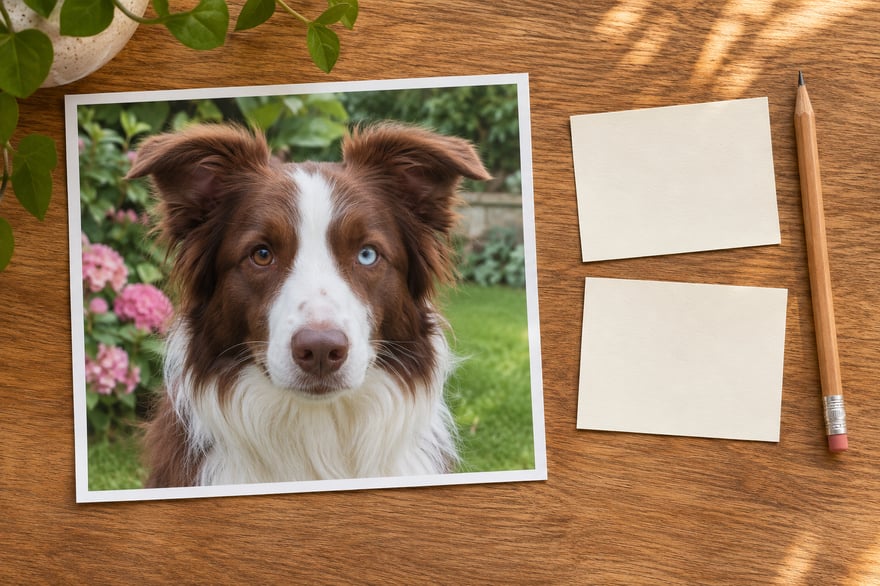
Will every portrait style show the colors equally well?
A monochrome portrait cannot preserve blue and brown as distinct hues. A wider scene may give the eyes very little space. Decide early whether visible eye color is essential or whether you mainly want the expression and outline of the face.
Look at the actual preview. Check whether the eyes remain readable at the intended display size, rather than judging only a highly enlarged crop. If color is the feature you most want to keep, discuss a color treatment and composition that give it room.
At Yours, Theo, the initial preview helps you choose a direction. For a printed portrait, a real artist refines the piece with your preferences and feedback before you approve it for printing. The portrait buying guide explains that process.
What should you check before approval?
Compare the reference and portrait together. Check which eye has which color, any patches within the iris, and whether the pupils still look natural. Also look at the whole face. Correct colors alone cannot compensate for eyes that are too widely spaced or a gaze that feels unfamiliar.
Describe the difference plainly: “The brown eye has become blue,” or “Please keep the blue softer, closer to the reference.” Our preview review guide helps you combine those notes into clear feedback.
Common questions
Can I order a portrait of a pet with two different eye colors?
Make that detail explicit when sharing your reference, and check it in the preview and approval conversation. Do not assume the difference will be obvious from a small upload.
What if only one eye is visible?
Provide another photograph of the same pet if the intended portrait will show both. A profile does not establish the hidden eye's color.
Should I choose black and white if the colors are uncertain?
Only if you like that treatment. You can also discuss the uncertainty with the studio before settling the direction.
Ready to start
Choose your clearest reference, add one precise note, and start your portrait. The familiar details deserve to stay familiar.