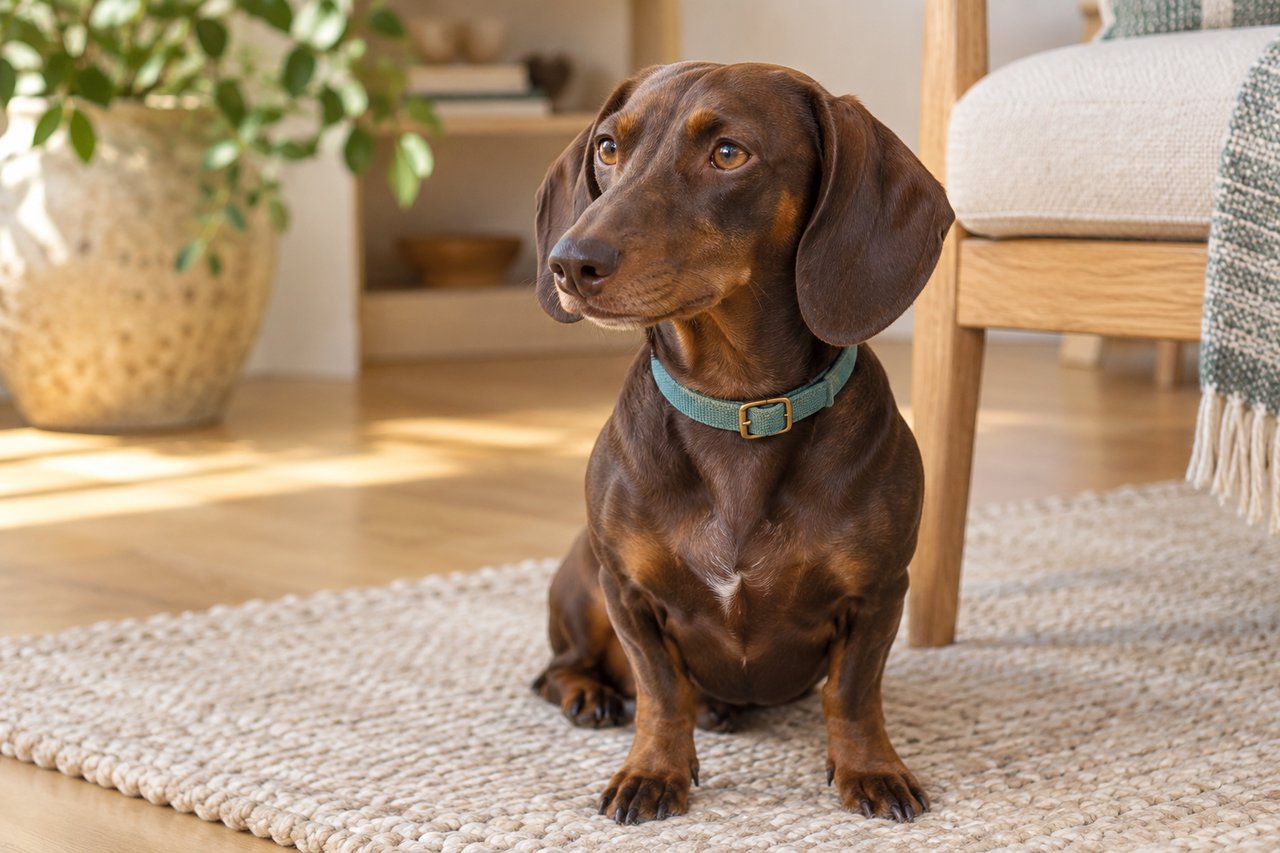
A pet portrait with or without a collar can feel equally personal. Keep the collar if it belongs to the way you picture your pet; ask about leaving it out if you want the face and natural coat to lead. Make that choice before ordering, because studios and portrait styles handle accessories differently.
The faded collar from daily walks may matter more than a new one bought for the photograph. Or you may barely notice it until you see how much of the chest it covers. Neither choice needs to be dressed up as the more artistic one. The useful question is what you want to recognize on your wall.
How do you choose a pet portrait with or without a collar?
Look at a few favorite photographs before deciding. Is the collar part of the familiar picture, or simply something your pet happened to be wearing?
- Keep it in your brief if its color, shape or history matters to you.
- Ask about omitting it if it draws attention away from the expression you love.
- Pause before choosing if it hides a marking you want the portrait to preserve.
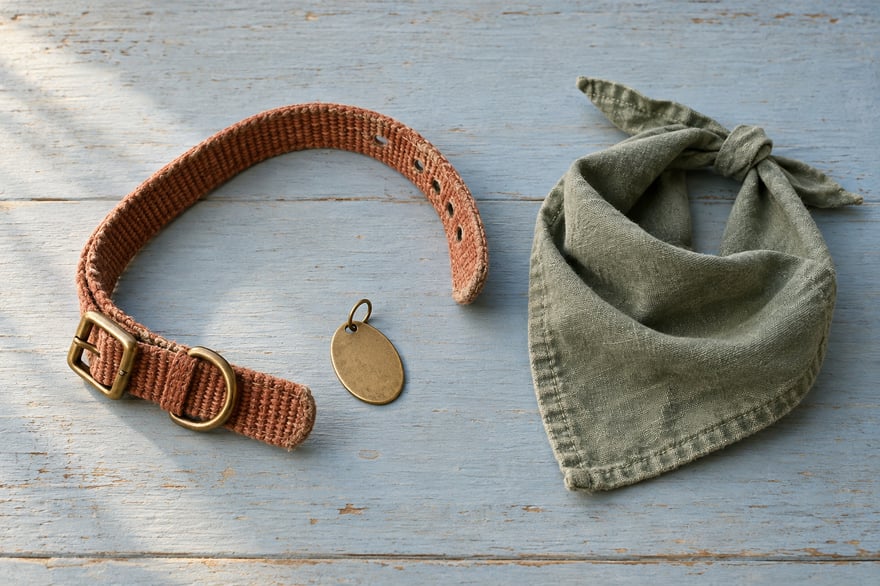
Treat the collar, tag and bandana as separate choices. Wanting the blue collar does not necessarily mean wanting its dangling tag, and a favorite bandana does not need to appear in every portrait.
For a gift, ask the person who knows the pet best if you are unsure. A worn accessory may carry a memory that is not obvious from the photograph.
Will the studio automatically remove collars and harnesses?
Do not assume there is a shared rule. Some studios leave accessories out; others include them unless the buyer asks otherwise. Check the guidance for the particular portrait you are considering, especially if the collar is essential to your choice.
At Yours, Theo, your selected scene helps shape the first preview. For a printed portrait, a real artist then reviews your photos and preferences and refines the piece with you. Our portrait buying guide explains the process and approval before printing.
If an exact accessory must stay, ask the studio whether that request suits your chosen theme before ordering. An initial preview alone is not confirmation that every detail can be preserved or changed exactly as you imagine.
What if a harness hides the chest markings?
A strap across the chest can conceal the edge of a white patch, the direction of the fur or part of the body's outline. Asking for the harness to disappear also means deciding what should appear beneath it.
Look for another photograph of the same pet that shows that area clearly. Keep your favorite face photo as the main reference, and explain that the second image is there to show the chest. A picture of another dog of the same breed cannot establish your dog's markings.
You do not need to retake a good outdoor photograph just to remove walking equipment. Keep the setup that allows your pet to remain secure and comfortable. An existing indoor photograph may provide the missing detail.
If no reference exists, say so. Ask what the artist can reasonably show, or whether keeping the accessory or choosing a closer composition would suit the piece. Our photo selection guide covers the wider question of choosing a clear starting image.
What changes when the collar is left out?
The space beneath the jaw becomes part of the portrait. Look at how the neck joins the chest, where the coat changes color and whether the familiar outline still feels right. Removing an accessory should not turn a narrow neck into a broad one or invent a new patch of fur.
A painterly portrait can simplify individual hairs while keeping the features that identify your pet. You are looking for their proportions and markings within the chosen style, rather than expecting every brushstroke to behave like a photograph.
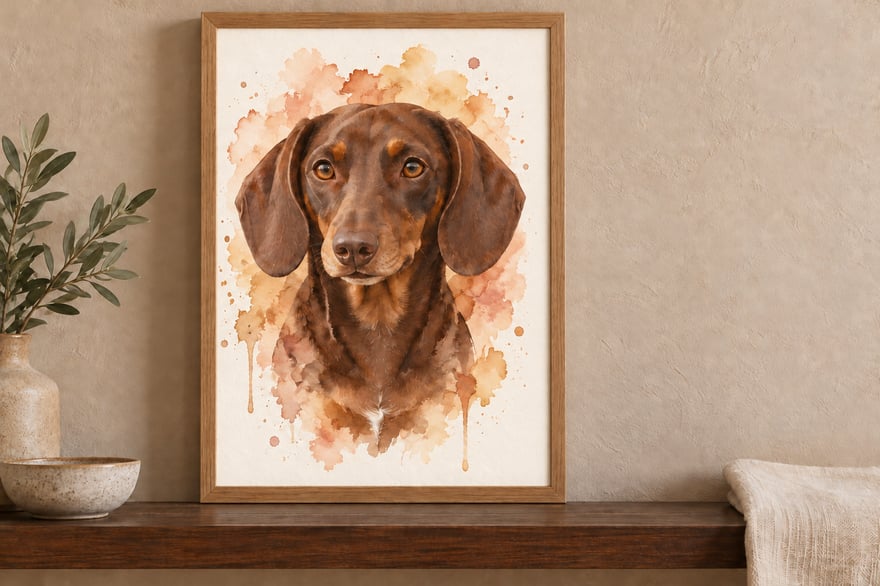
The illustration below shows a collar-free interpretation of the synthetic dachshund in this article's cover. Its pose, background and medium have changed; the long ears, chocolate-and-tan face and small white chest tuft remain the points of recognition.
How should you explain the choice to your artist?
A short, specific note is easier to act on than several overlapping instructions. Name the item, your preference and any supporting reference.
For example:
Please keep the teal collar, but leave out the tag. The collar color matters to me. Please tell me if that does not suit this theme before proceeding.
Or:
I would prefer the harness left out. Use the first photo for the face and the second for the white chest patch. Please check with me if the hidden area is still unclear.
Ask about tag lettering separately. If the tag stays, specify whether you want a plain shape or a name, and avoid including personal contact details in the artwork. Do not assume tiny lettering will be readable at every print size.
When the refined portrait arrives for review, compare it with your note. Our preview review guide helps you give clear feedback before approval.
Common questions
Can a collar stay in a memorial portrait?
Yes, it can be part of what you want remembered, provided the studio and selected style can accommodate it. There is no need to remove a familiar detail simply because the portrait is a remembrance.
Should I edit the collar out of my photo first?
Keep the original available and explain the requested change. An edited image may hide useful information about the neck or coat. Let the studio assess the original before you replace it with a cleaned-up version.
What if I change my mind after seeing the preview?
Raise it before approving the artwork. Ask what is possible at that stage rather than assuming a change can be made after printing.
Ready to start
Choose the photo that feels like your pet, make a note of the details you want to keep, then start your portrait. A small decision about a collar can help the finished piece feel more fully theirs.