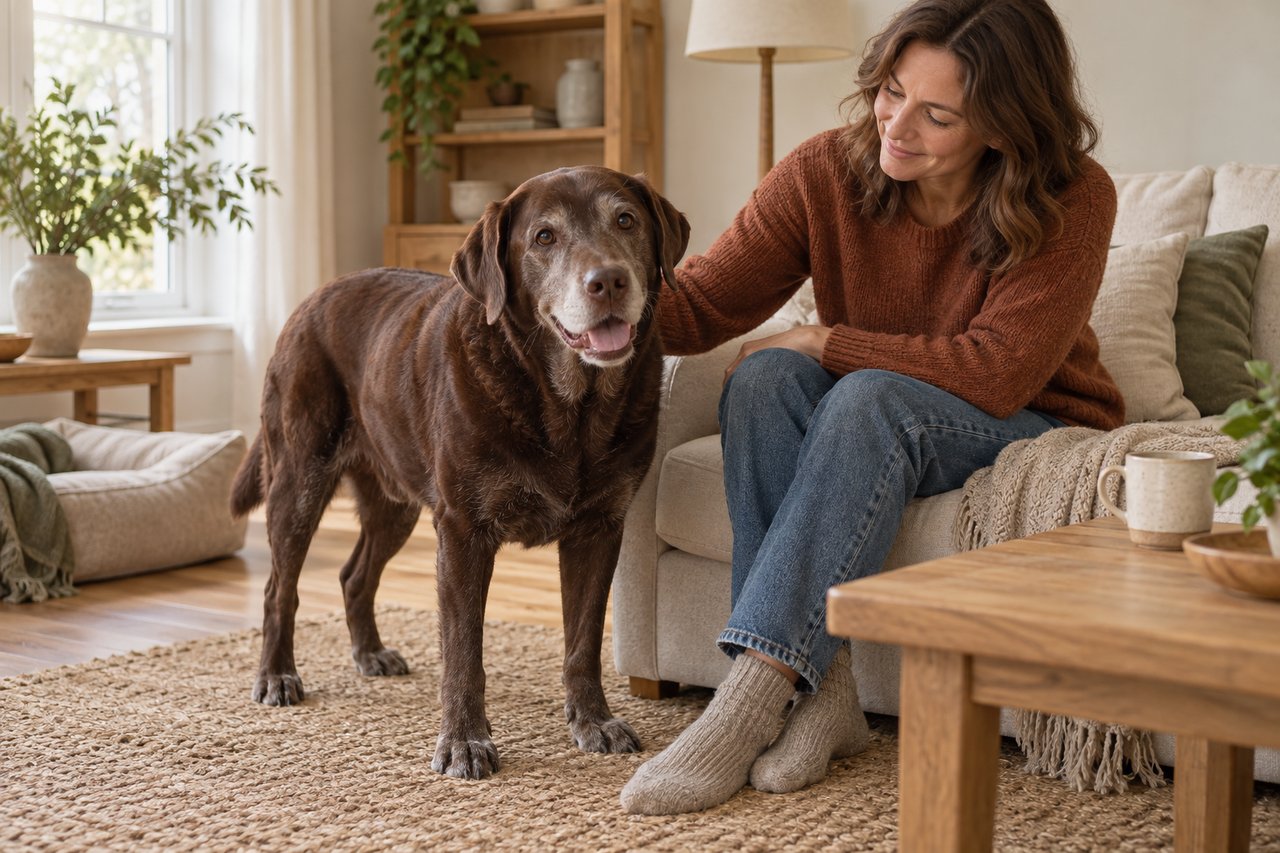
A senior dog portrait can celebrate your dog exactly as you know them today. Choose the life stage you want the artwork to show, keep the features you love, and give the artist a clear reference for that version of your companion.
That might mean the silver around a once-dark nose, an ear that never quite stands up, or the patient expression watching you make breakfast. There is room for all of it in a piece you can enjoy together now.
What should a senior dog portrait celebrate?
Start with an ordinary moment you would like to keep seeing. Your dog waiting beside your chair. The look they give you when you pick up the lead. Their head lifted from a favorite resting spot when you enter the room.
You do not need a milestone or a special reason to commission the portrait. It can simply belong to this chapter of your life together.
Before choosing a scene, finish this sentence: “I want this portrait to remind me of...” A specific answer gives the piece a direction. “Our quiet mornings” suggests something different from “the little character who still steals my seat.” Age is one part of the subject; personality gives you the rest.
Should you use a younger photo or a recent one?
Choose the age you want represented first. Then choose the photograph that shows it clearly. A puppy photo, a picture from the middle years and a recent snapshot can all matter, but they answer different questions.
If you want your dog as they are now, make a current image the main reference. An older photograph might clarify a marking hidden in the newer picture, but explain that it is supporting information. Otherwise, a darker young muzzle and a silver older face can leave the intended result unclear.
If you prefer a younger version, that is a valid choice too. You are choosing a particular chapter, not ranking which years mattered most.
Try this simple sorting exercise:
- Pick one photograph for the life stage and expression you want.
- Keep any additional picture only if it explains a particular detail.
- Write down what the extra image is meant to show.
One clear direction is more useful than a folder of photographs with no explanation.
Which age details should stay in the artwork?
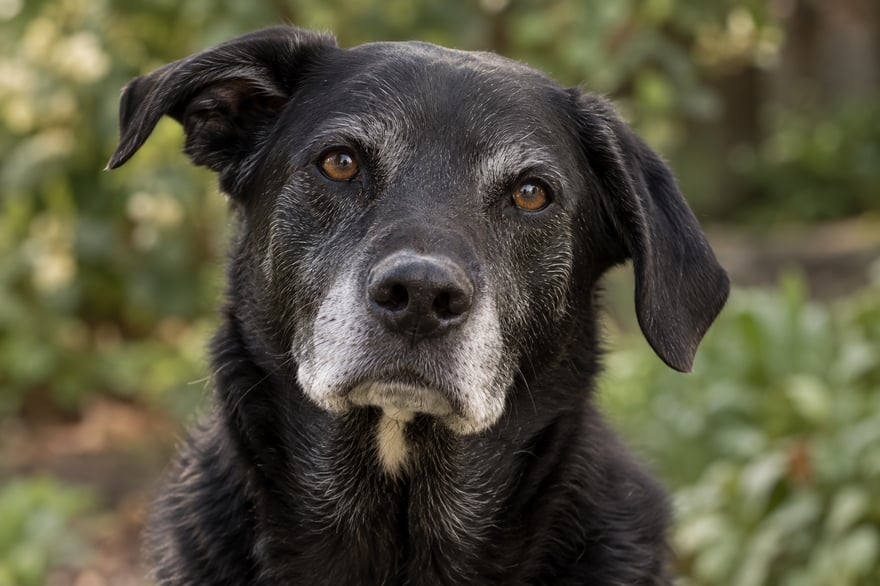
Look for the features that make this older face familiar to you. A grey muzzle may have an uneven edge. Pale eyebrows may soften a serious expression. A little patch under the chin may be almost invisible until your dog looks up.
Tell the artist which of those details belong in the portrait. “Please keep the grey around her nose as it appears in the recent photo” is clearer than asking for a generally younger or brighter face.
The same applies to a distinctive tooth, a nicked ear or another visible feature you care about. You can name it plainly without explaining your dog's medical history. If you are unsure whether to keep something, discuss the choice before the final artwork is approved.
There is no need to request every individual hair. Concentrate on the shapes, markings and expression that help you recognize your companion across the room.
How can you take a reference photo without asking too much?
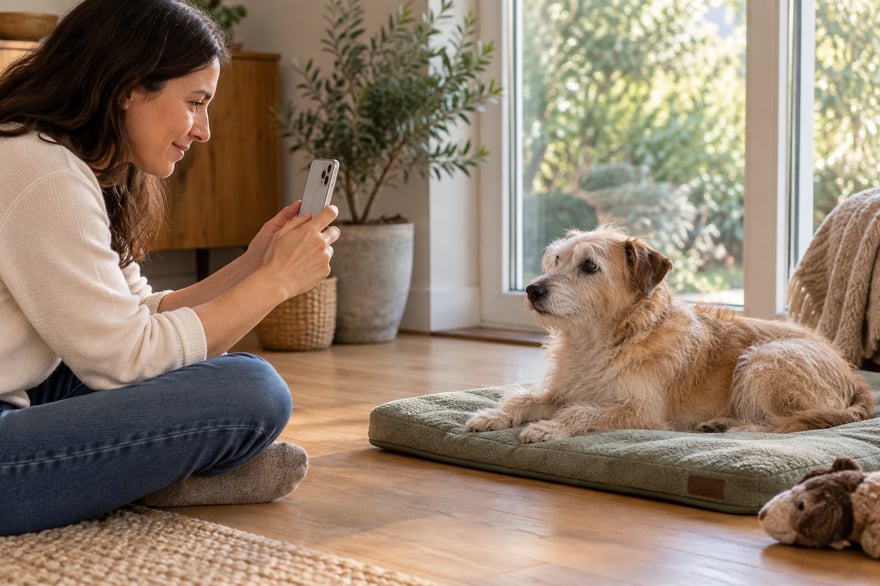
Let the photograph fit into a moment when your dog is already comfortable. If they are resting on a floor mat, bring yourself and the camera down to that level. You do not need to put them on a chair or ask for a long sitting pose.
Use the expression they offer naturally. A relaxed mouth or a gently raised head can be a better starting point for this portrait than an unfamiliar, carefully arranged pose. Take a few pictures, then let the moment end. If your dog wants to move away, try another time or use a photograph you already have.
For the practical checks on light, focus and framing, use our guide to choosing a portrait photo. The purpose here is to find a clear reference without making the picture more important than your dog's comfort.
How do you brief an artist about an older dog?
Keep the note short enough that its priorities are obvious. Include the life stage, the familiar details and the mood you want.
For example:
Please show him as he looks in the recent photo. Keep the silver around his muzzle and his softly folded ear. I would like the portrait to feel warm and curious, like he does when he is watching us in the kitchen. The older photo is only there to show his chest marking.
Then choose a scene that suits that intention. An older dog does not automatically need a solemn setting. Browse the current dog portrait collection with their personality in mind.
At Yours, Theo, a real artist reviews and refines every printed portrait with you before production. Our craft page explains that process. When the artwork comes back, use the same short note alongside our portrait preview guide to check the result.
Common questions
Is a portrait of a senior dog a memorial portrait?
It does not have to be. A portrait of a living older dog can celebrate your everyday companionship, with a mood and setting chosen for the dog you know.
Can I give one to someone with an older dog?
Yes, if it suits the recipient. Ask which photograph they love and whether they would enjoy choosing the direction. Keep the message about their companion and your affection for them; avoid turning the gift into an unexpected farewell.
What if the only clear photograph is from years ago?
Tell the studio which age you want the portrait to show. Ask whether your available references support that result before committing, rather than assuming a younger face can be aged accurately from a description.
Ready to start
Choose the photograph that feels like the chapter you want on your wall, then start your portrait. Bring a few words about what makes your dog familiar. The silver hairs can have their place, along with everything else you love.