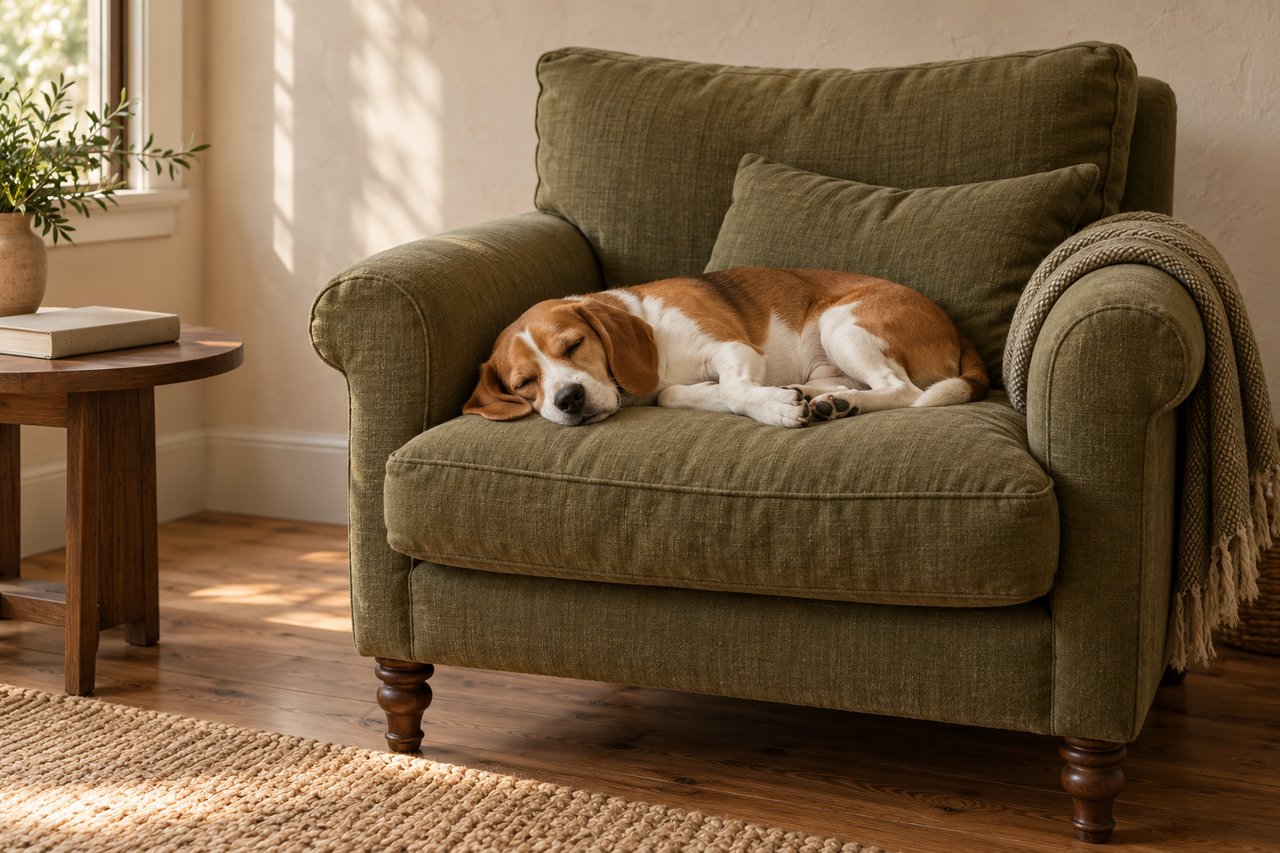
A sleeping dog portrait can preserve the closed eyes, folded ears and familiar curl you love. The key is to decide whether you want that exact resting pose in the artwork, then choose a reference that shows it clearly and confirm that the studio can build the scene around it.
Perhaps it is the nose tucked beside a paw, or the way your dog takes up one particular corner of the chair. Those quiet moments can be the ones you most want to keep. They need a different brief from a portrait of a dog sitting upright and looking at you.
Can a sleeping dog portrait have closed eyes?
Yes, closed eyes can be an intentional part of the portrait. You do not need to replace a familiar sleeping expression with an alert one simply because most photo guides recommend visible eyes.
First, separate two requests that can sound alike:
- Preserve the sleeping pose: the closed eyes, head position and resting body are the point of the picture.
- Use a sleeping photo for a different scene: you want the dog's likeness, but the finished dog may be sitting or standing with open eyes.
The second request needs information the sleeping photograph may not contain. An awake photograph can show eye shape and color, but it does not make every change of pose straightforward. Tell the studio which result you mean before choosing a direction.
For a gift, check that the recipient loves this particular resting moment. A photograph you find sweet may not be the expression they would choose for their wall.
What should the sleeping reference show?
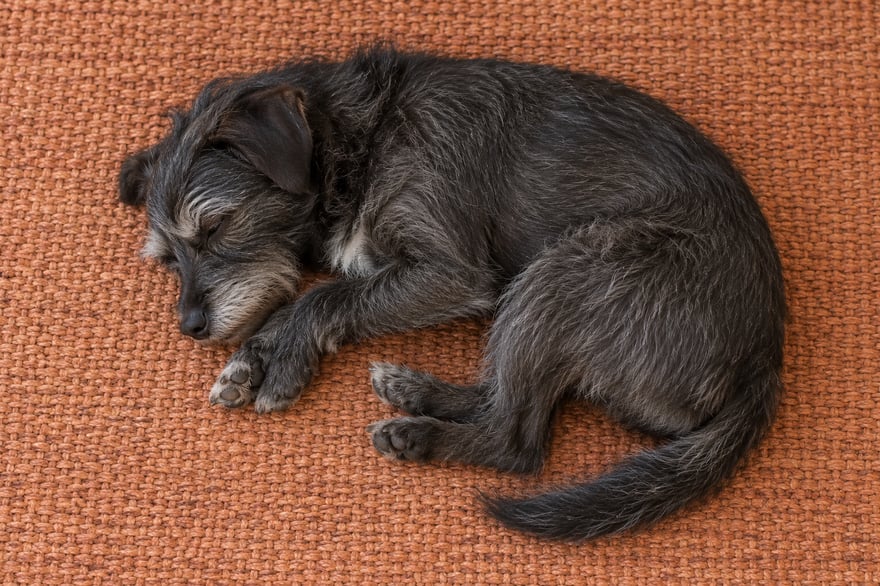
Look at the whole shape before zooming into the face. Can you follow the outline from the head along the back? Can you tell where the front paws rest and whether the tail belongs beside the body or underneath it?
A useful reference shows:
- The angle of the head and the surface supporting it.
- The visible outline of the ears, nose and muzzle.
- Enough of the body to explain the curl or stretch.
- Any paws, tail or coat markings you want included.
Keep the original photograph uncropped. A close crop may show the face beautifully while removing the bend of the legs that makes the pose understandable. You can point out the important area without discarding the wider view.
If you take a new picture, photograph the position your dog has already chosen. Move yourself if another angle is clearer, and leave the dog resting. There is no need to rearrange paws or wake them for this reference.
What if a blanket or cushion hides part of the dog?
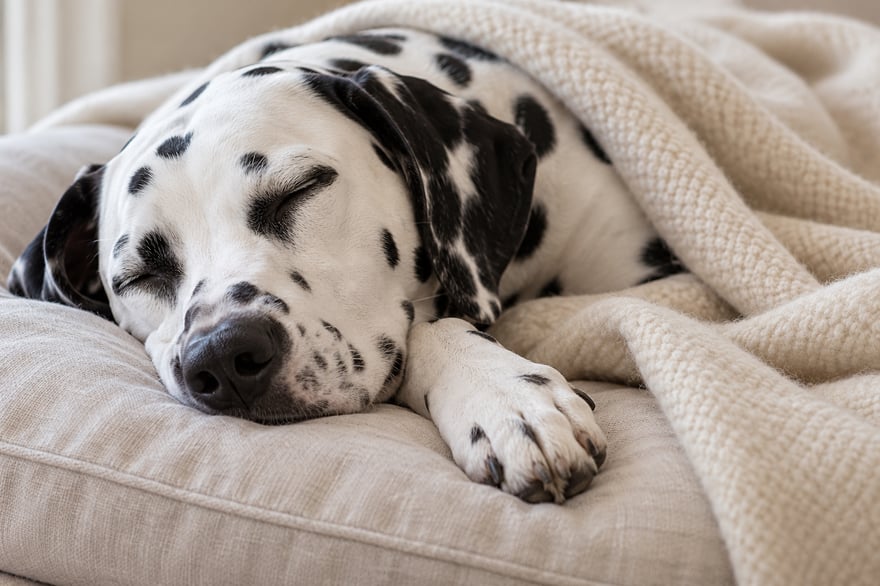
Decide whether the covering belongs in the finished scene. A blanket can explain where the body disappears; removing it may require the artist to construct a leg or marking that the photograph never shows.
If you love the tucked-in pose, say which parts should remain concealed. You do not have to reveal every paw to make a complete picture. What matters is that the visible parts connect naturally and the dog feels settled on the surface beneath them.
If you want the bedding removed, ask what extra references would help. A clear photograph of the same dog's chest or legs may explain their appearance, but the artist still needs to resolve how those parts fit the resting pose. Keep uncertainty explicit instead of expecting hidden details to be guessed.
Look especially closely where pale fur meets pale fabric. A white paw can disappear into a cream blanket, leaving the edge harder to read than it first seems.
Will any portrait theme preserve a sleeping pose?
Do not assume that uploading a sleeping photograph means the selected scene will keep that pose. A theme built around an upright figure may need a different composition from a dog curled on a cushion.
If preserving the nap is essential, explore our custom portrait commission and describe the resting pose in the brief. This route develops a scene with an artist. Ask how your photograph would be interpreted before committing to a particular result.
Think about the finished picture's shape too. A stretched-out dog occupies a wide area. In a vertical portrait, keeping the whole body may leave more space above and below it, or make the face smaller. Ask to see how the composition handles that tradeoff. Cropping away the paws is not the only possible answer.
Our portrait buying guide explains the distinction between choosing an initial direction and approving the artist-refined printed portrait.
How do you explain what must stay the same?
Write one short note about the pose, one about the setting, and one about any supporting photographs. For example:
Please keep her asleep, with her chin resting across her front paws. The fold of her left ear is part of the pose I love. The sofa can become a simpler surface, but her head should still look supported. The awake photo is only there to clarify her facial markings.
An awake reference should not silently override the sleeping one. Label its purpose when you share it, and ask the studio how to provide additional images. Our photo selection guide helps you choose a clear supporting view.
Before approval, check whether the head has weight on the cushion or paws, whether visible limbs join naturally, and whether the eyes have stayed closed as requested. Then look at the whole picture. Does it still feel like the familiar nap? The portrait preview guide explains how to turn a concern into specific feedback.
Common questions
Can I use a sleeping photo for an awake portrait?
Ask first and provide an awake reference of the same dog if you have one. Closed eyelids do not show the eye color or open-eye expression the artist would need.
Does a sleeping portrait have to be a memorial?
No. It can celebrate an everyday moment with a dog who is very much part of life at home. Choose the mood and setting you want it to have.
What if this is the only photograph I have?
Send the original and explain what you hope to preserve. Ask which details can be represented confidently and which will need a simpler treatment.
Ready to start
Find the resting moment you would recognize anywhere, then start your portrait. If the sleeping pose is essential, bring that detail into the conversation from the beginning.